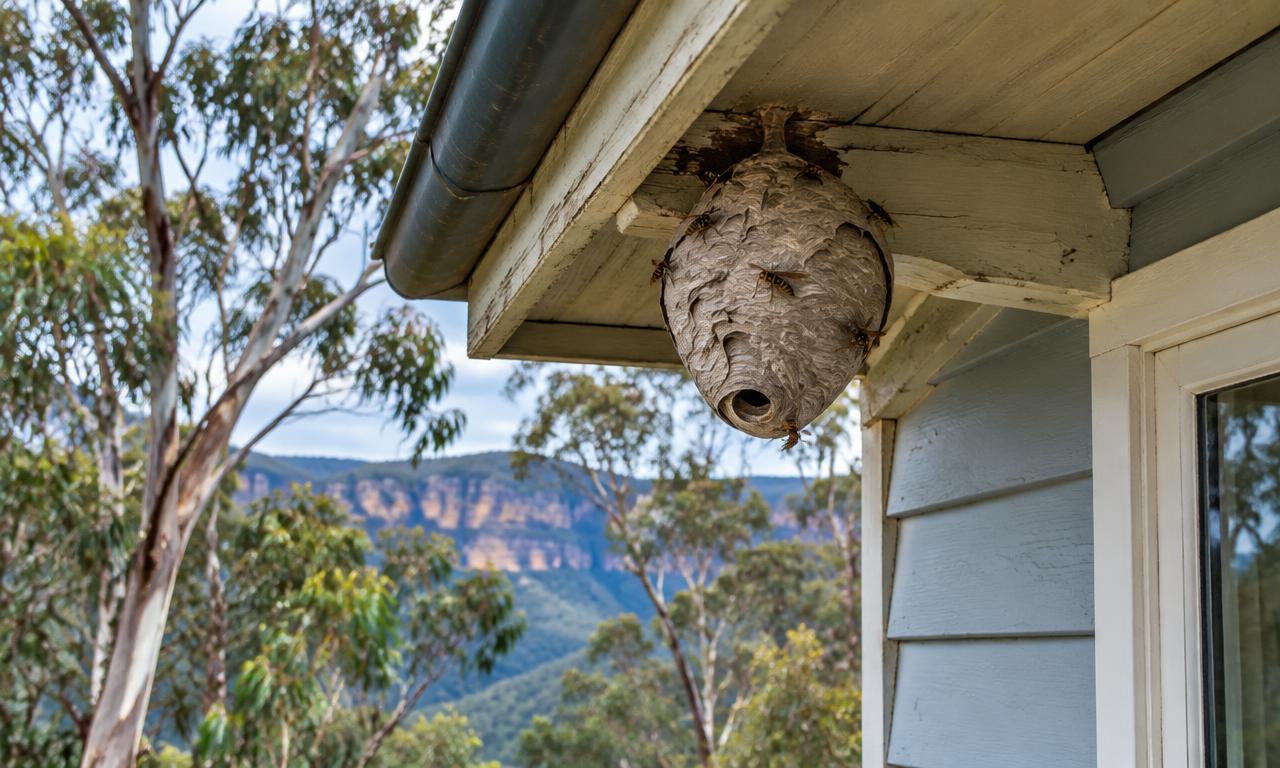
A nest beside a door, beneath a deck or near a frequently used garden area can bring people close to defensive wasps. The safest response is to keep your distance and arrange identification and advice. Disturbing a nest to test whether it is occupied can expose you to multiple stings.
Location matters as much as size
A small nest beside a busy doorway may be more disruptive than a larger one well away from people. Note where insects enter and exit from a safe position. Nests may be visible or concealed in cavities, so the outside opening does not always reveal the full extent.
Do not seal an active opening or dismantle wall cladding before the nest is assessed. This can disturb the insects and complicate management. Keep children and pets away and avoid gardening or maintenance beside the activity.
Wasps and bees need correct identification
Different insects require different responses. If bees are suspected, discuss the possibility of appropriate bee-management advice rather than assuming a wasp treatment is suitable. A safe photograph of the activity may help, but do not approach for a close-up.
Avoid dangerous home remedies
Do not burn a nest, use fuel or spray from a ladder near active insects. These actions add fire, fall and sting risks. A professional plan should account for the nest location, access, occupants and the product label.
Tell the technician if anyone at the property has a known serious sting allergy. This information helps plan the work and appropriate precautions, but it does not replace their medical advice or emergency plan.
Recognise a medical emergency
Call 000 for signs of a severe allergic reaction, including difficulty breathing or collapse, and follow the emergency operator’s instructions. People with a prescribed adrenaline autoinjector should follow their personal action plan. Seek medical advice for multiple stings or other concerning symptoms.
Ask about aftercare
Clarify how long to avoid the area, whether further activity is expected and when to report continuing wasps. Some nest locations need another assessment before removal or repairs. Around Lawson, Katoomba and the lower mountains, safe access and correct identification are more important than assuming every nest can be dealt with in the same way.
Further safety guidance: Healthdirect: anaphylaxis.