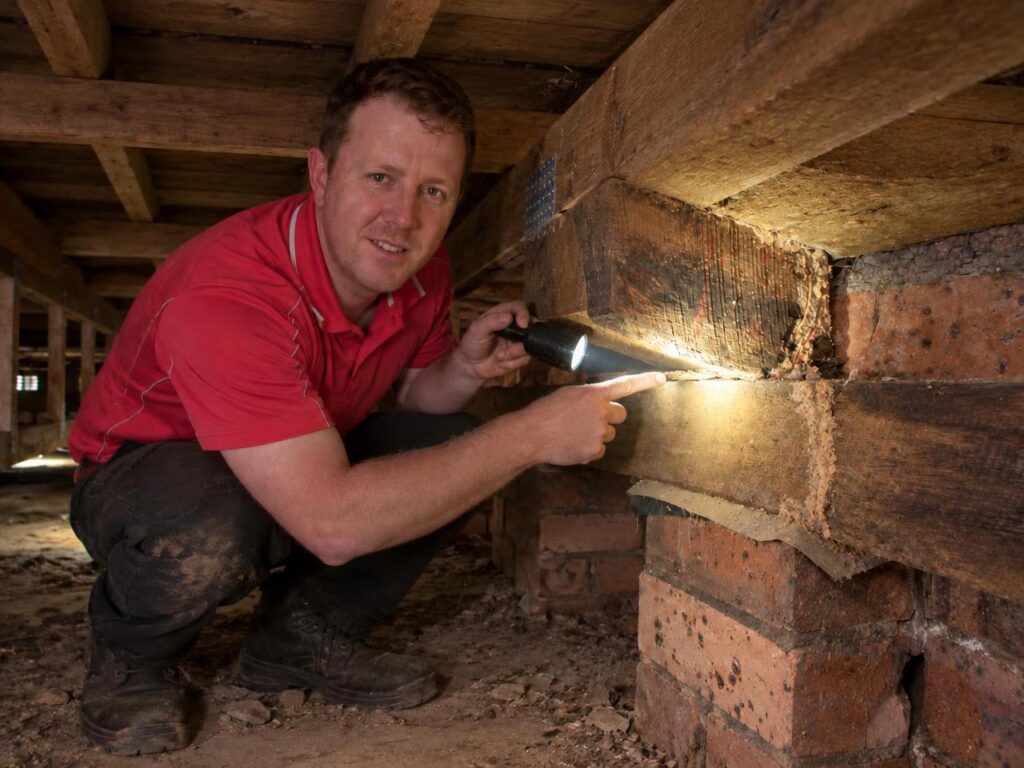
Edited illustration of Jason inspecting subfloor timber; it is not evidence of an inspection at a particular property.
Jason & Katie
Jason and Katie are our husband-and-wife team at Pest Control-Blue Mountains. Behind our pest and termite services is a family team you can put a face to, helping households and businesses across the Blue Mountains and Penrith.
Jason and Katie · Our husband-and-wife team
Jason · Part of our family team
Meet Andy & Lucy, our K9 termite dogs
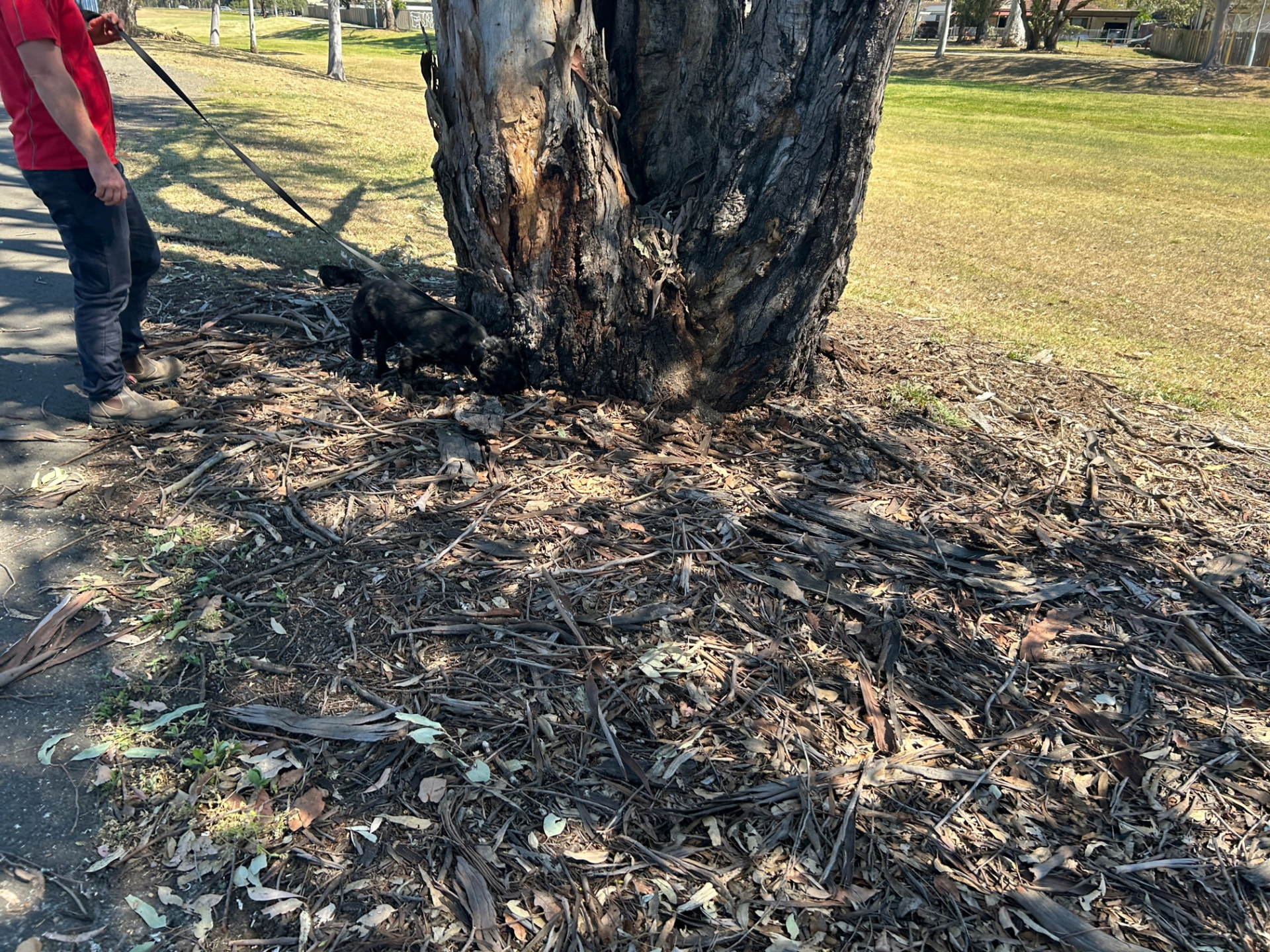
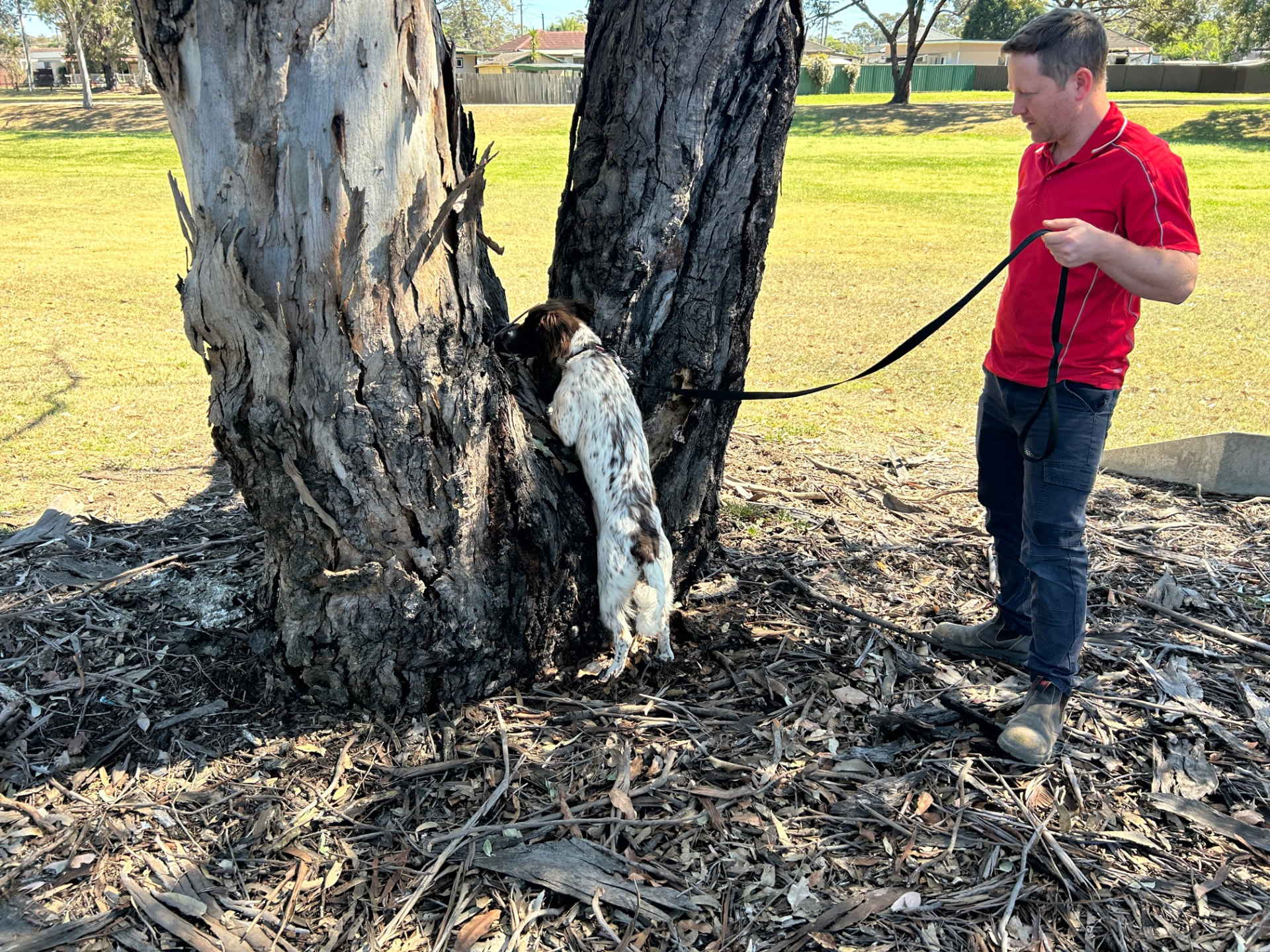
Andy and Lucy are our two K9 termite dogs. These photos show them exploring around a tree with Jason. A K9 search can support a professional termite inspection; any indications need follow-up checks and are not a guarantee that a property is termite-free. Talk to Jason and Katie about whether a K9 inspection suits your property and the available appointments.
Termite inspections, treatment & baiting
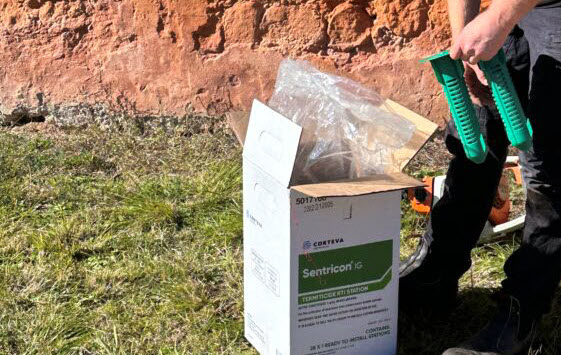
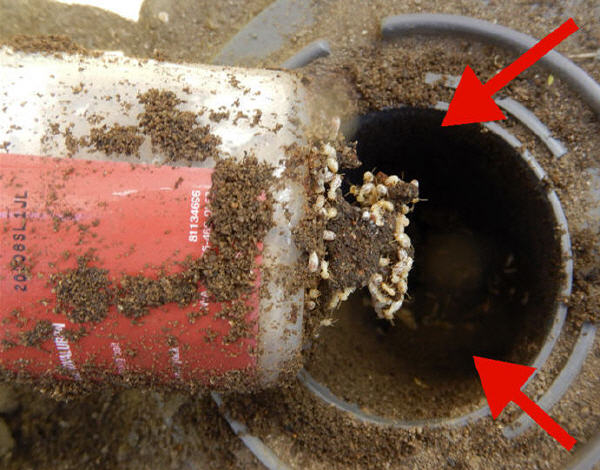
Our own job photos show in-ground monitoring and bait stations, above-ground baiting and signs of termite damage. Ask Jason and Katie about Sentricon and Trelona baiting options and which approach suits your property. Treatment selection and follow-up depend on the inspection findings.
Jason preparing Sentricon termite bait stations
Termite activity on a Trelona bait cartridge
A beautiful mountain cottage can hide timber-pest risks that are not obvious during an open home. A pre-purchase termite inspection gives you a clearer picture of accessible timber, evidence of activity and conditions that may encourage termites before you commit to a purchase. Pest Control-Blue Mountains helps buyers across the mountains and Penrith understand the findings rather than simply handing over a document. Tell Jason and Katie the property address, your proposed purchase timetable and any access restrictions early. The inspection needs to fit the sale process, but it should not be rushed into an assurance that concealed parts of a building cannot support.
What a pre-purchase inspection examines
The agreed inspection scope determines which accessible areas can be assessed. Depending on safe access, these may include internal rooms, external walls, roof spaces, subfloors, decks, fences and relevant grounds around the building. We look for termite workings, damaged timber, moisture issues and construction details that can conceal entry. A detached garage or garden structure should be discussed when booking rather than assumed to be included. Let us know about additional buildings and the lot layout so the scope can be confirmed. An accessible inspection does not involve opening every wall or dismantling the home.
A termite report is not a building report
A timber-pest assessment and a building condition assessment answer different questions. Termite evidence may affect structural timber, but the extent of structural damage often requires a qualified building professional. Likewise, roofing defects, electrical safety and plumbing compliance are outside a termite-only inspection. If you need a broader timber-pest report covering other organisms as well as termites, confirm that scope before booking. We will distinguish observed pest evidence from assumptions about the structure. Your building inspector can then consider repair requirements while your legal adviser handles the purchase conditions and any requests to the seller.
Access arrangements that help the inspection
Ask the selling agent to arrange access to the house, safe subfloor openings, roof access points and any locked outbuildings included in the scope. Stored items, fixed cabinetry and floor coverings may restrict what can be seen. A locked hatch or a low, unsafe subfloor is a genuine limitation, not a minor administrative detail. Discuss these issues in advance so there is time to ask whether access can be improved. We will not enter dangerous spaces or remove building materials without appropriate arrangements. Clear access allows a better assessment, but it never makes every concealed timber visible.
Reading the findings without false reassurance
A report should separate evidence found on the day from areas that could not be assessed. No visible activity in accessible areas does not mean termites have never affected the property or cannot be present behind a wall. Read the limitations alongside the findings, not as an afterthought. Ask which areas were inaccessible, whether there were signs of previous treatment and whether a further investigation is recommended. Photographs can help explain an observation, but they do not reveal the whole building. We can discuss the practical significance of an observation without presenting an accessible inspection as a guarantee.
Previous termite systems and treatment records
A seller may provide an old treatment invoice, a warranty document or details of installed bait stations. These records are useful, but they need to be read carefully. Find out what was installed, when it was maintained and whether any agreement can transfer to a buyer. A station lid in a garden does not establish that a system is current or effective. Renovations, landscaping and missed servicing can change the situation. We can identify visible management features and suggest questions for the existing provider. Do not rely solely on a statement that the home was treated some years ago.
Mountain cottages, bushland and local conditions
Properties near Glenbrook Lagoon, Springwood village and the wooded streets around Wentworth Falls can sit close to natural termite habitat. Older cottages may have enclosed subfloors, timber additions and decks built at different times. Homes near Leura and Katoomba also vary considerably in access and drainage. These local settings help guide questions about the property, but a landmark does not determine whether a particular house has termites. The inspection must follow evidence at that address. We consider the relationship between timber, soil, moisture and concealed entry rather than labelling every bushland home as infested.
Penrith purchases and outdoor timber
Buyers in Emu Plains, Glenmore Park, Kingswood and Mulgoa should include outdoor timber and landscaping in their questions. Garden sleepers, retained soil, decks and attached structures can affect access and provide concealed routes near the home. Properties around the Nepean River vary in drainage and construction, so the assessment is property-specific. Newer construction does not remove the need to understand the installed termite management system. Ask for the system documentation, maintenance requirements and evidence of changes since construction. An inspection can identify visible concerns and help you plan the next steps without assuming that a modern home is risk-free.
If activity or damage is discovered
Finding termite evidence before a purchase can create urgent questions, but it should not prompt immediate spraying or removal of damaged timber. Preserve the evidence and seek advice about the appropriate investigation. Active termites, old workings and timber damage may require different follow-up. Where structural integrity is uncertain, involve a qualified building professional. The buyer, seller and their advisers can decide how to address findings within the sale process. We can explain potential treatment pathways, but costs and suitability require the relevant scope and property details. A discovery should lead to informed questions rather than a rushed promise of an easy fix.
Planning around auctions and cooling-off periods
Tell us whether you are considering an auction, negotiating a contract or working within a cooling-off period. Booking availability and property access can affect the timing of an inspection and report discussion. Do not assume a visit can be arranged immediately before a deadline. Your conveyancer or solicitor should explain the legal implications of the timetable. Our role is to confirm the inspection arrangements and communicate the findings clearly. If access is incomplete, additional assessment may need more time. Raise that possibility early rather than expecting a limited visit to answer every question on the last day.
After you receive the report
Read the whole report and note the recommended follow-up actions. Ask for clarification of unfamiliar terms, especially where the findings describe concealed entry, restricted access or evidence of previous attack. Share relevant findings with your building inspector and legal adviser. Keep the report with any treatment records supplied by the seller so that you can plan maintenance if the purchase proceeds. A pre-purchase inspection is a snapshot in time, not an ongoing management agreement. Once you own the property, regular inspections and maintenance of any installed system remain important responsibilities, even where the purchase inspection found no visible active termites.
Book the right inspection for your purchase
Contact Jason and Katie with the address, building type, agent contact details and your preferred inspection window. Mention any known termite history, extensions, outbuildings or inaccessible spaces. We can confirm the available appointment and discuss the proposed scope before you book into our system. Questions about specialist equipment, invasive checks or K9 support should be raised separately so their suitability and availability can be assessed. The aim is to provide useful, clearly explained information for your purchase decision, with honest limitations and practical next steps, rather than an identical inspection promise for every property.
Pre-Purchase Termite Inspections: local service areas
Other pest services
Buying a property? Arrange a termite inspection.
Talk to Jason and Katie about pest control for your property in the Blue Mountains or Penrith.