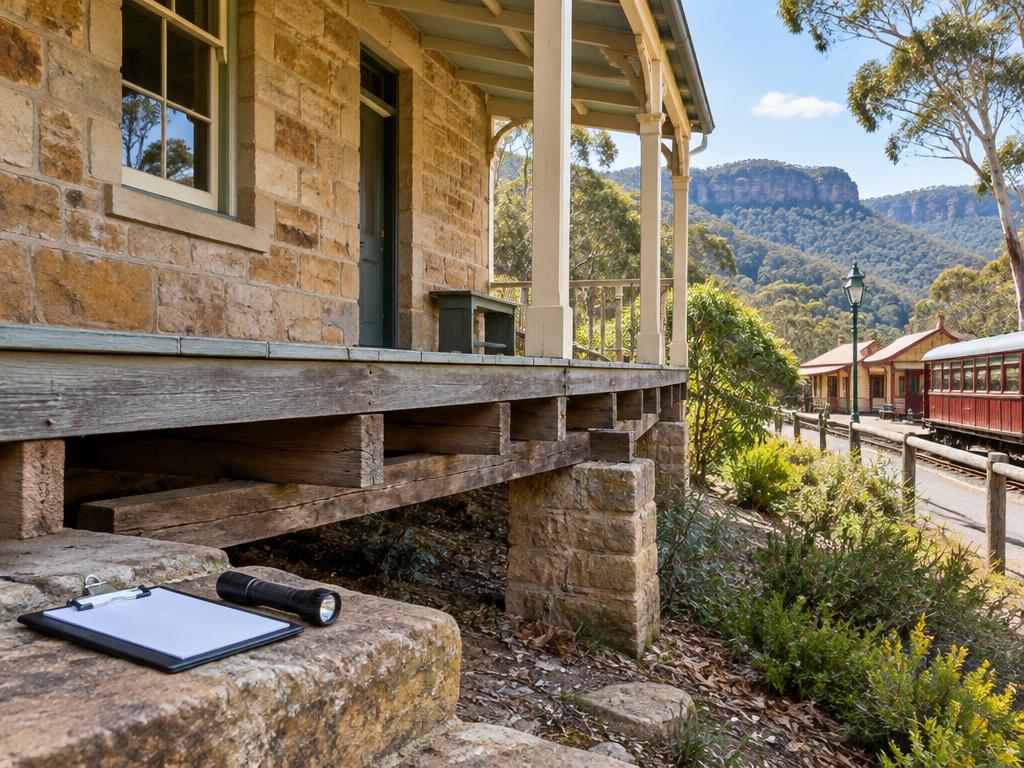
Mount Victoria railway station is a familiar landmark in a historic upper-mountains village. A character house can have attractive original features and inaccessible timber at the same time. A pre-purchase timber pest report provides information about the accessible areas inspected on that visit. It is not a guarantee against every hidden defect or a replacement for contract advice.
Arrange access through the agent early
Ask about keys, stored belongings, floor access points and permissions before the appointment. Limited clearance and unsafe conditions can restrict inspection even when everyone cooperates. Do not remove structural material yourself. Agree on the scope with the inspector and find out how any additional investigation would be arranged if the visual inspection leaves important questions unanswered.
Read the restrictions before the conclusion
An area that cannot be inspected is not automatically clear. Look for descriptions of concealed timber, locked spaces and other limitations. Ask what safe additional access is recommended and why it matters. Photographs help locate findings, but they do not replace a written explanation. Make decisions using the full report rather than a brief no live termites summary.
Ask about earlier work and records
Request earlier treatment documents and any warranty conditions held by the seller. Old damage can remain after successful treatment, while a previous service does not certify the current condition. Check ongoing servicing requirements and whether any warranty is transferable. The inspector should distinguish observed evidence from historical information and explain unresolved activity rather than relying on a seller’s verbal assurance.
Keep pest and building questions separate
A timber pest inspector can record visible evidence and damage, but structural integrity and repair costs may require another qualified professional. A building inspection addresses different issues. Your conveyancer can advise on timing, contract conditions and document review. Neither a scenic location nor a neat renovation tells you whether concealed timber has been assessed or what repairs might involve.
Turn findings into follow-up questions
Clarify recommended treatment, maintenance and further investigation before committing to assumptions about the property. Drainage, timber contact and additions may be relevant, but a method should be proposed from the findings. Mount Victoria and nearby Blackheath properties vary widely. The useful outcome is a clear account of what was checked, what was found and what remains uncertain.