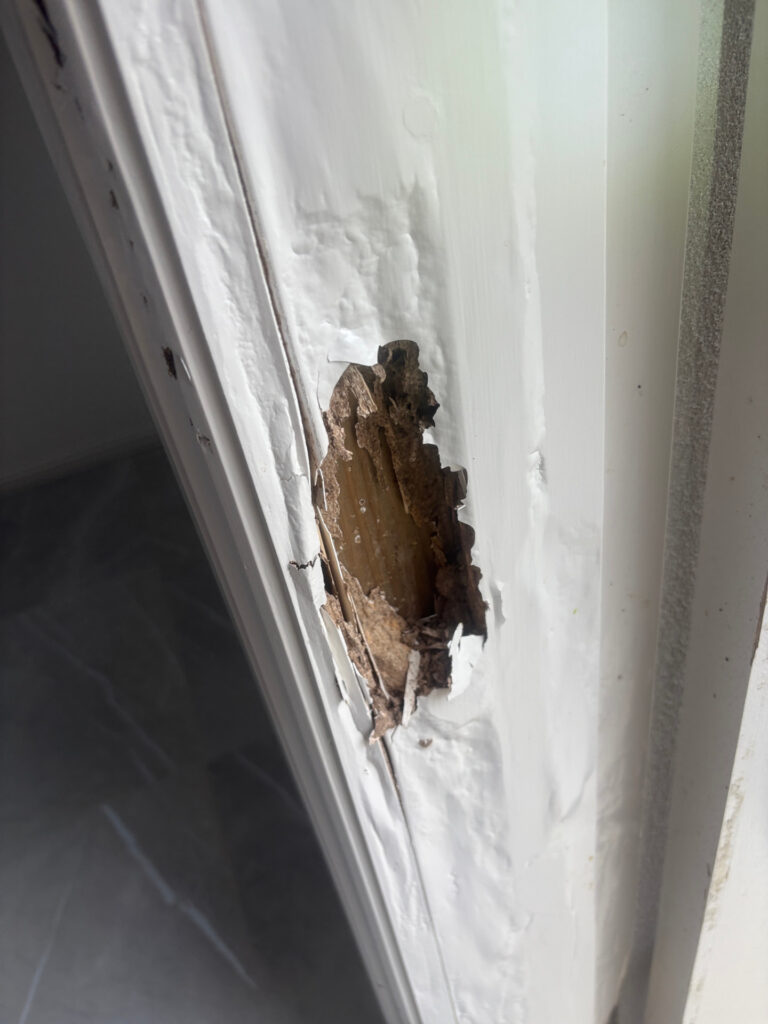
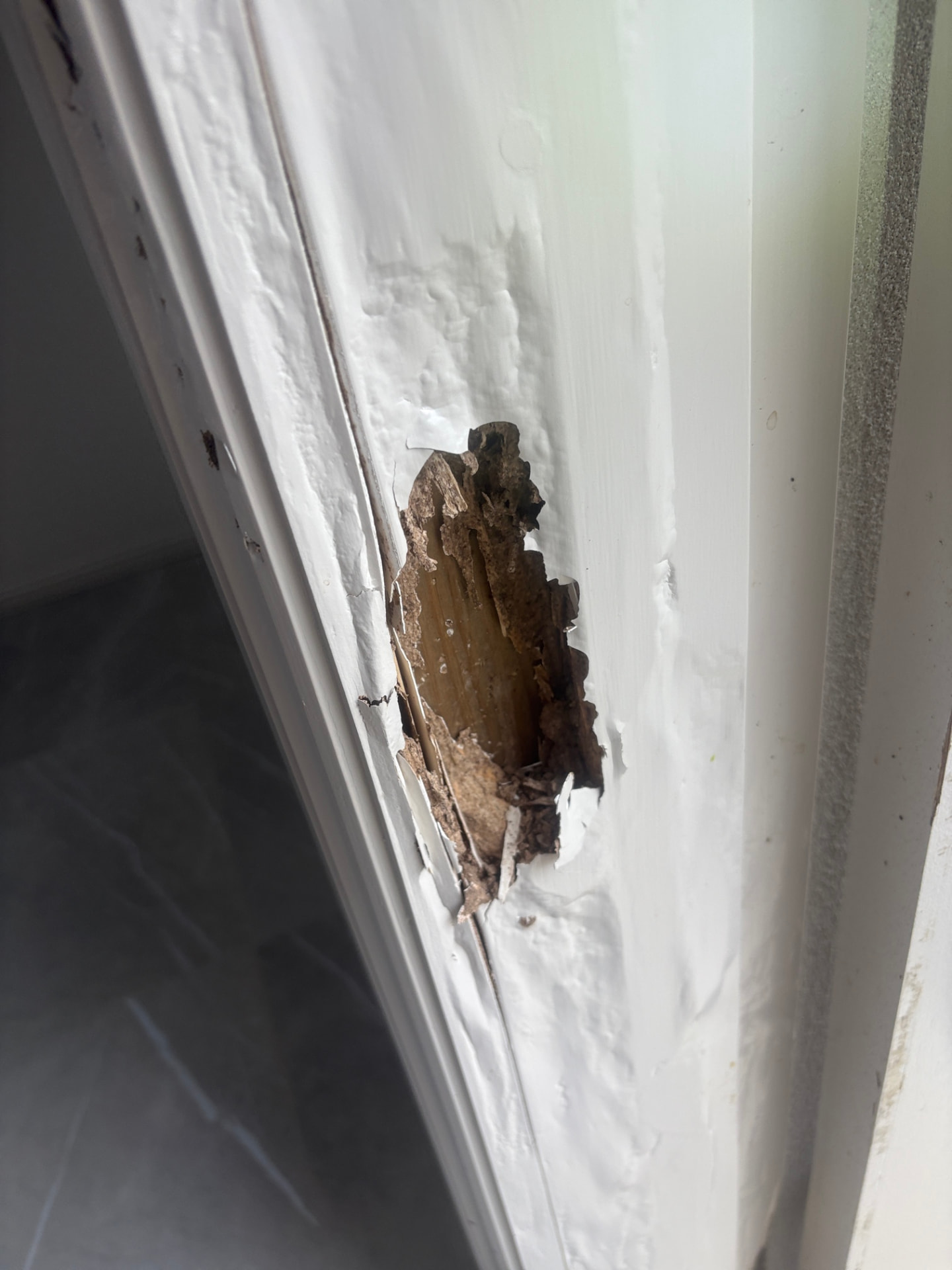
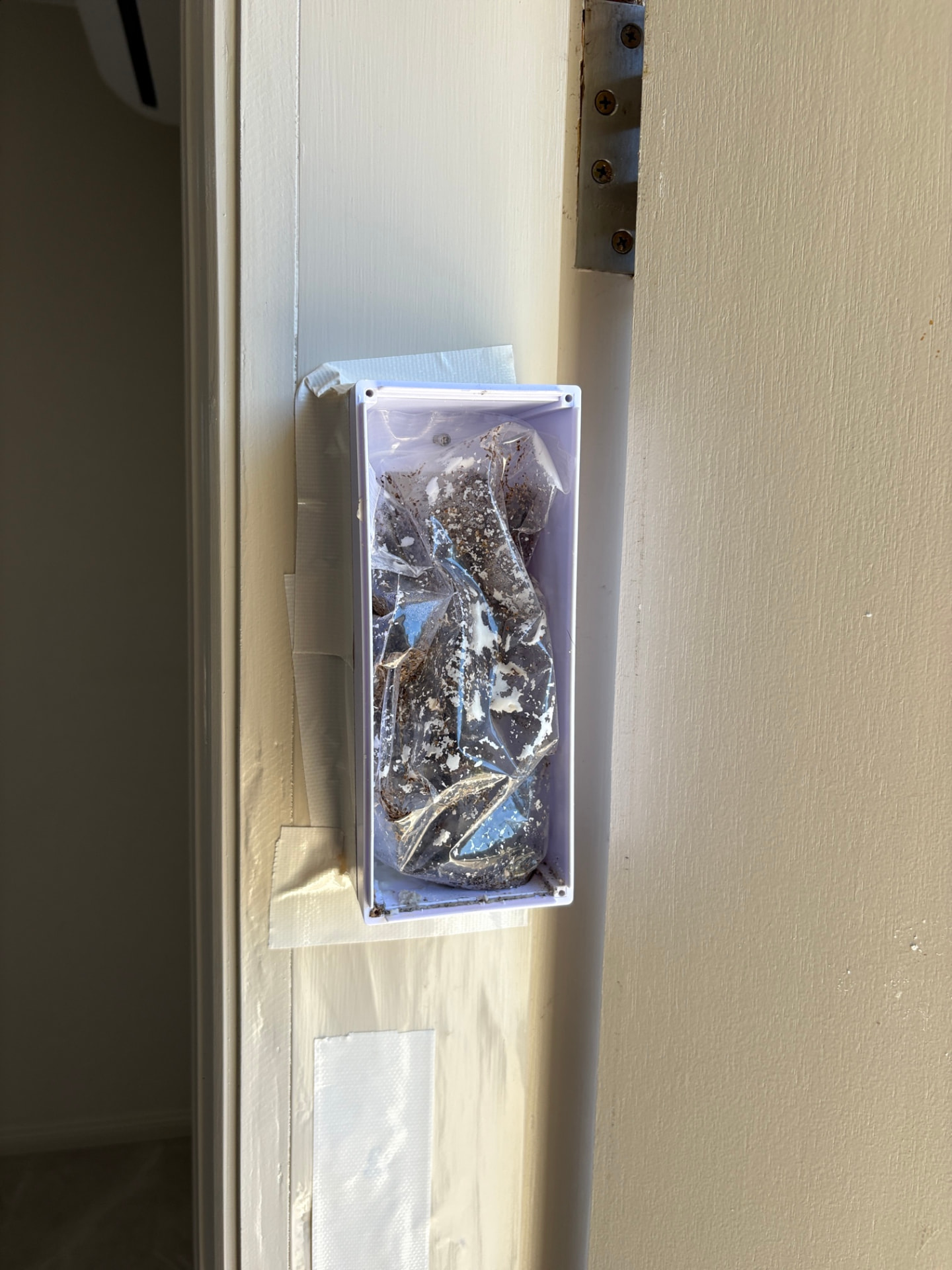
Supplied job photo showing termite damage in a door frame; the photo does not identify the location of your property.
Jason & Katie
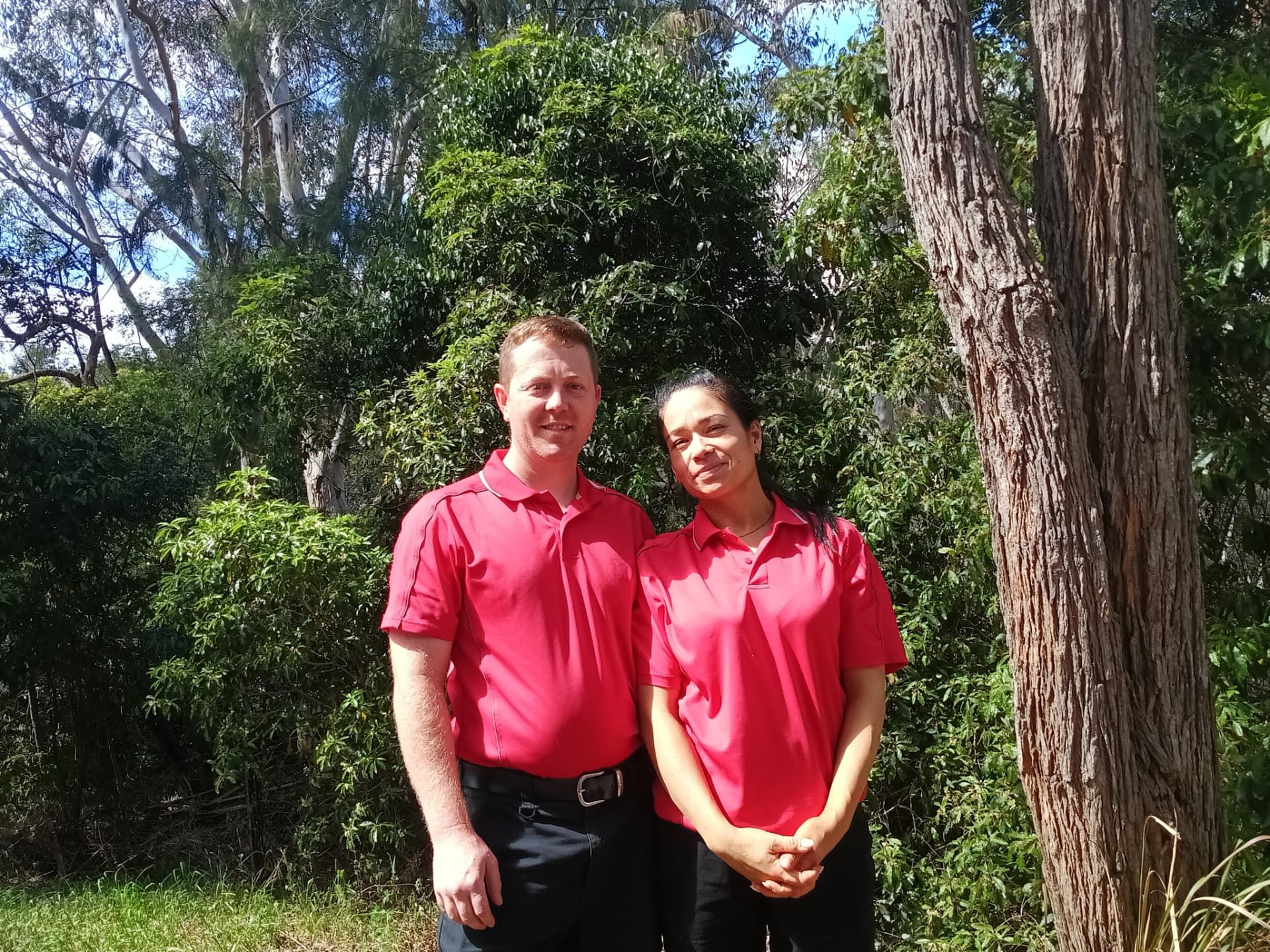
Jason and Katie are our husband-and-wife team at Pest Control-Blue Mountains. Behind our pest and termite services is a family team you can put a face to, helping households and businesses across the Blue Mountains and Penrith.
Jason and Katie · Our husband-and-wife team
Jason · Part of our family team
Meet Andy & Lucy, our K9 termite dogs
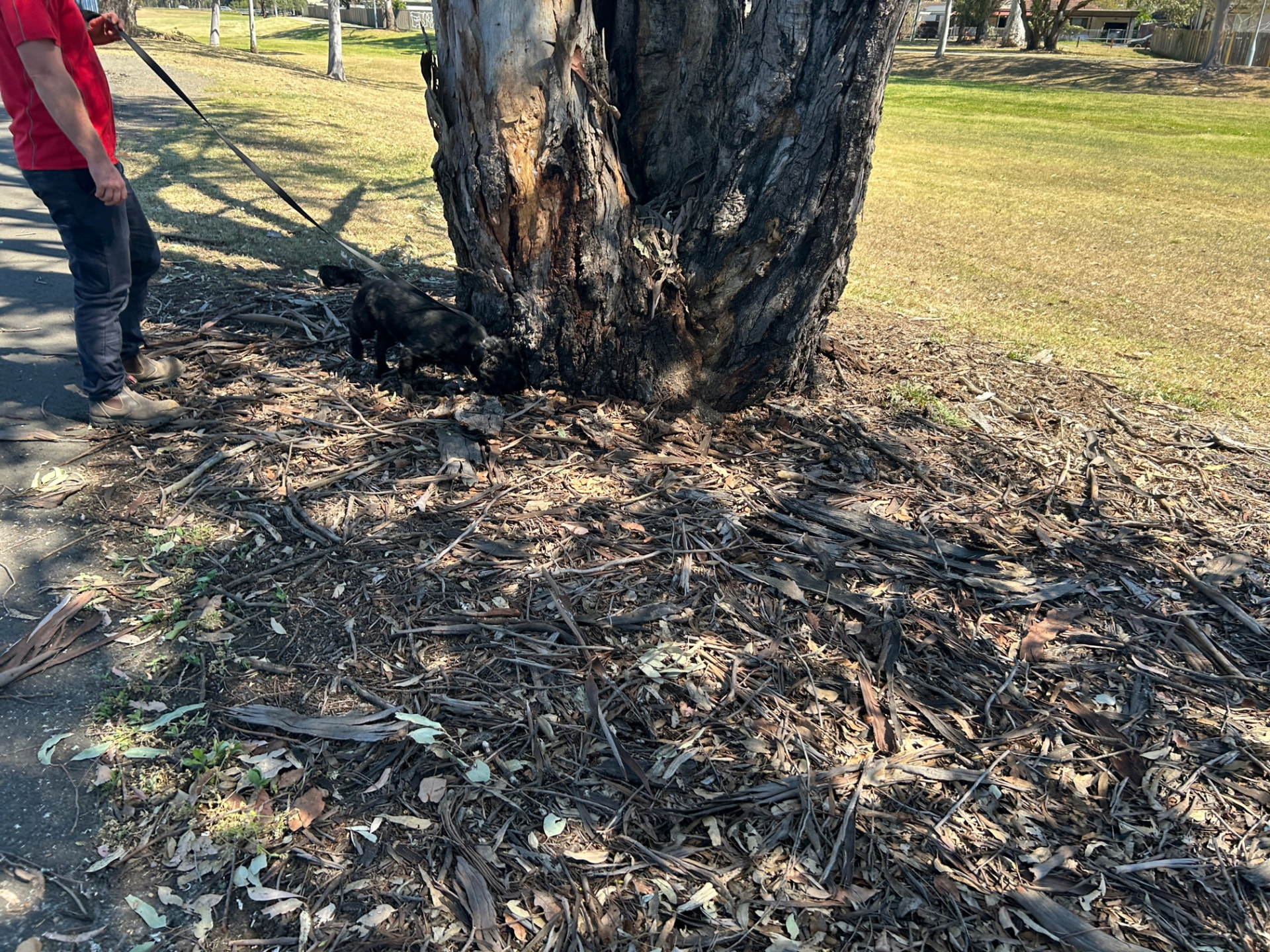
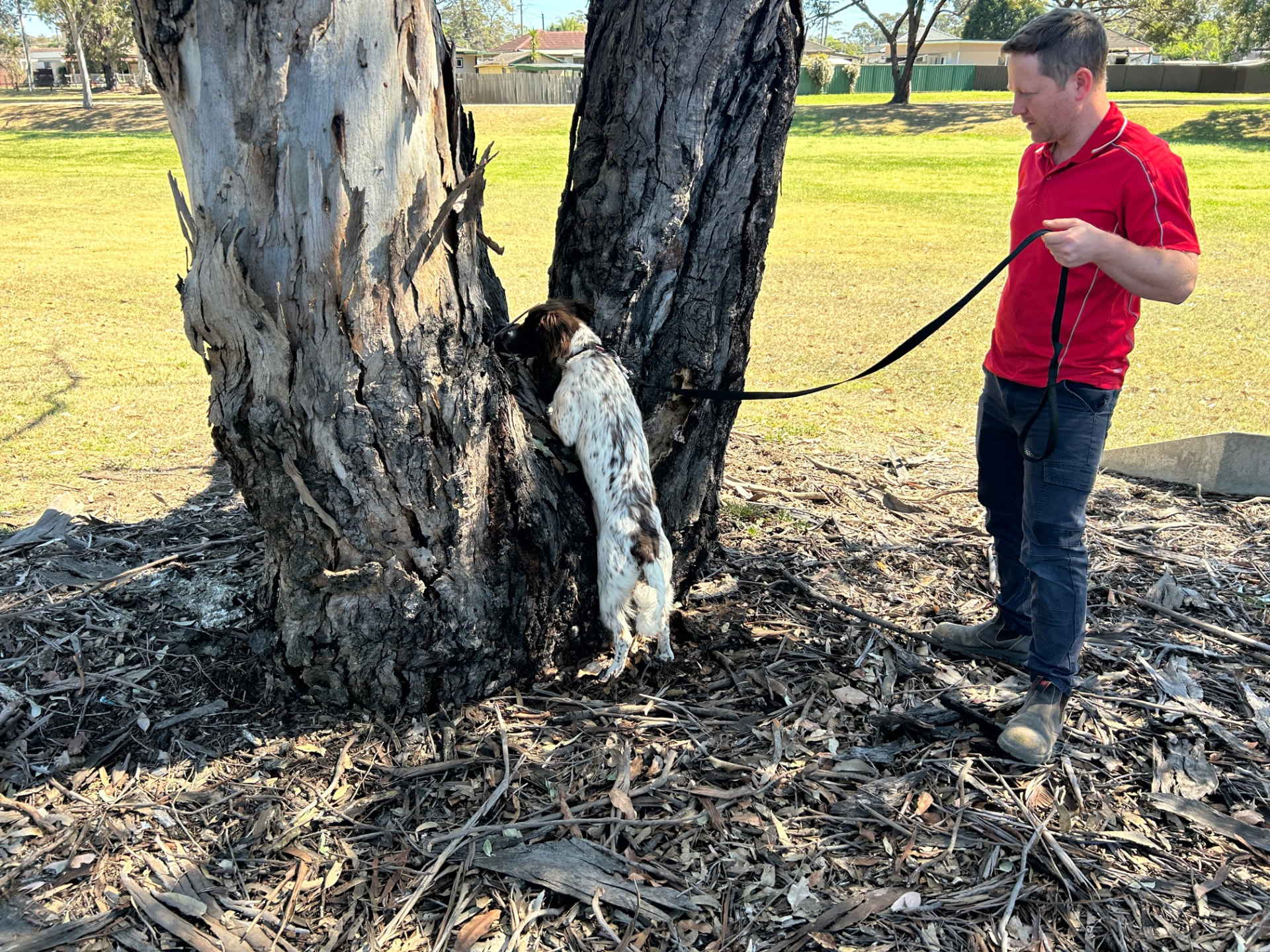
Andy and Lucy are our two K9 termite dogs. These photos show them exploring around a tree with Jason. A K9 search can support a professional termite inspection; any indications need follow-up checks and are not a guarantee that a property is termite-free. Talk to Jason and Katie about whether a K9 inspection suits your property and the available appointments.
Termite inspections, treatment & baiting
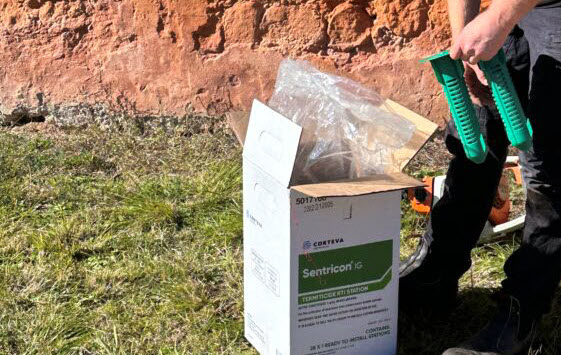
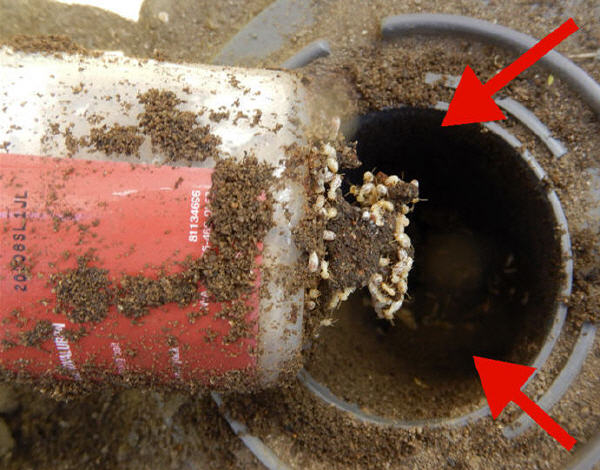
Our own job photos show in-ground monitoring and bait stations, above-ground baiting and signs of termite damage. Ask Jason and Katie about Sentricon and Trelona baiting options and which approach suits your property. Treatment selection and follow-up depend on the inspection findings.
Jason preparing Sentricon termite bait stations
Termite activity on a Trelona bait cartridge
Termite damage exposed in a door frame
Inside an above-ground termite bait station
Discovering live termites can be alarming, particularly when the first sign is a hollow door frame, a mud-covered timber or insects beneath a garden sleeper. The most useful immediate response is to stop disturbing the area and seek professional advice. Do not assume the insects you see are the whole colony, and do not try to solve the problem with a household insect spray. Pest Control-Blue Mountains helps property owners understand what has been found and the next assessment steps. This page focuses on the discovery itself: protecting evidence, keeping people safe, explaining the location and preparing for an inspection rather than choosing a product before the problem is understood.
Stop opening up the affected timber
If you have uncovered insects or mud workings, pause before pulling apart more timber. Disturbance can change termite behaviour and remove useful evidence about their access route. Do not lift additional flooring, strip skirting boards or break open a wall simply to see how far the activity extends. Where it is practical and safe, leave the exposed area as it is and ask us whether it should be loosely covered. Avoid fastening anything into affected timber. If the discovery suggests a structural problem, keep people away from the unsafe area and seek appropriate building advice as well as pest assessment.
Do not spray the insects you can see
Household sprays may kill exposed termites without addressing the colony supplying them. Spraying can also contaminate the site and make some treatment approaches more difficult to assess. The same caution applies to pouring chemicals, bleach, fuel or other improvised substances into workings or soil. These actions introduce avoidable safety and environmental risks. If a product has already been applied, tell us its name, where it was used and roughly when. Do not conceal that information out of embarrassment: it helps the inspection and treatment discussion. Professional advice should begin with the evidence and conditions, not a rush to use another chemical.
Record the location without causing further disturbance
Take a clear photograph from a safe position if the termites or workings are already visible. Record the room, wall, fence, tree or garden feature involved and the date of the discovery. Note whether the area was opened during repairs, gardening or routine cleaning. A wide photograph showing the surrounding space can be more useful than a blurred close-up alone. You do not need to collect insects or force an opening for a picture. Keep photographs for the inspector, but remember that an image cannot establish the full extent of an infestation or replace an assessment of the property.
Termites, ants and other insects can be confused
Pale insects in damaged timber may be termites, but photographs and descriptions are not always enough for reliable identification. Winged termites may be mistaken for flying ants, and old mud markings can remain after activity has changed. We look at the insects, workings and surrounding evidence together where access allows. Describe what you actually observed rather than relying on an online comparison. If there are no insects currently visible, report the damage and mud workings anyway. A careful identification matters because termite management is different from a general ant treatment and because old damage should not automatically be described as current activity.
When the discovery is inside the home
Activity in skirting, door frames, flooring or a wall cavity needs a property-based inspection, not just treatment of the visible spot. Accessible roof spaces, subfloors and the exterior may provide clues about entry and other affected areas. Move people and pets away from damaged structures where necessary, but do not begin cosmetic repairs before the pest findings are assessed. In cottages around Glenbrook, Faulconbridge and Hazelbrook, additions and enclosed subfloors can make access particularly important. The building’s actual layout matters more than its age alone. We explain which areas can be inspected safely and where further investigation may be required.
When termites are found in a tree or garden
Termites naturally occur in bushland and may be found in stumps, sleepers, fallen timber or trees without proving that a nearby home is infested. However, a garden discovery is a reason to review the building and its management arrangements. Do not assume that removing a sleeper or cutting down a tree will eliminate the colony or protect the house. Tree safety and removal decisions may require an arborist and relevant approvals. Tell us the distance from the finding to the home and whether there are connecting timber structures. We can then discuss an appropriate inspection scope based on the evidence.
What an active-termite assessment aims to establish
The assessment seeks to confirm termite evidence, understand accessible activity and identify conditions affecting management. We consider possible entry points, termite species where identifiable, moisture sources and the construction details around the affected area. The nest may not be accessible or locatable, and concealed spaces may remain uncertain after an initial visit. You should be told about those limitations. The findings guide whether direct treatment, above-ground baiting, monitoring or another approach warrants consideration. The inspection does not mean every colony can be found immediately, nor does it establish a treatment price before the relevant work has been scoped.
How treatment is chosen after the assessment
Active termites may be managed through more than one approach. Direct treatment can be considered where accessible workings and site conditions suit it. Baiting may be appropriate where termites can feed in a station and be monitored over time. If a nest is located, its treatment may form part of the recommendation. Ongoing building protection is a separate question that should also be discussed. We explain the purpose of each proposed step rather than treating all discoveries as identical. Product selection, access, follow-up and precautions depend on the property and the registered product instructions, not just the name of a suburb.
Keep inspection evidence separate from repair decisions
Damaged timber may need attention from a builder or another qualified professional. Pest control does not restore its strength or determine every structural repair. If a floor, stair, deck or supporting timber appears unsafe, restrict use and arrange suitable building advice promptly. Otherwise, coordinate repairs with the pest-management plan so that useful evidence and treatment access are not removed prematurely. Keep photographs, inspection findings and repair records together. The sequence of work should be discussed clearly: controlling termite activity, assessing structural consequences and arranging restoration are connected tasks, but they are not the same service.
Blue Mountains and Penrith discoveries
We receive enquiries from homes near mountain bushland and from properties throughout the Penrith area. A cottage near Katoomba’s town centre, a house in Blackheath and a property near the Nepean River can have very different construction and access conditions. Homes in St Marys, Orchard Hills and Wallacia also vary in outdoor timber, drainage and previous management systems. Local landmarks help describe the setting, but they are not evidence of termite activity at an address. Tell us what you found at your own property so the response can focus on your circumstances rather than a general regional risk description.
What to tell Jason and Katie when you call
Have the address, a contact number and a short description of the discovery ready. Explain whether termites are still visible, whether the area is inside or outside, and whether any spray or repair work has already occurred. Mention restricted access, pets, tenants and any immediate concern about unsafe timber. Share existing treatment records if you have them. Ask about the next available assessment rather than assuming an emergency arrival time that has not been confirmed. We can discuss the booking arrangements and tell you what information or access would help the visit. There is no need to disturb the site further before calling.
After the first visit: follow-up matters
A treatment recommendation should explain the next steps and how progress will be assessed. Some methods depend on return visits and evidence gathered over time. Do not interpret the disappearance of termites from one exposed spot as confirmation that the entire colony has been controlled. Follow any precautions and keep agreed treatment points accessible. Raise new observations with the team rather than applying a separate product between visits. Once activity is addressed, discuss inspections, moisture maintenance and the ongoing management system. The discovery is the starting point of a property-specific plan, not a one-off promise that termites can never return.
Found Live Termites?: local service areas
Other pest services
Found live termites? Speak to our local team.
Talk to Jason and Katie about pest control for your property in the Blue Mountains or Penrith.