Termite Treatment Options in the Blue Mountains & Penrith
Why some Blue Mountains properties suit termite baiting, while others suit chemical soil treatment — and why the building, ground and active termite evidence decide the plan.
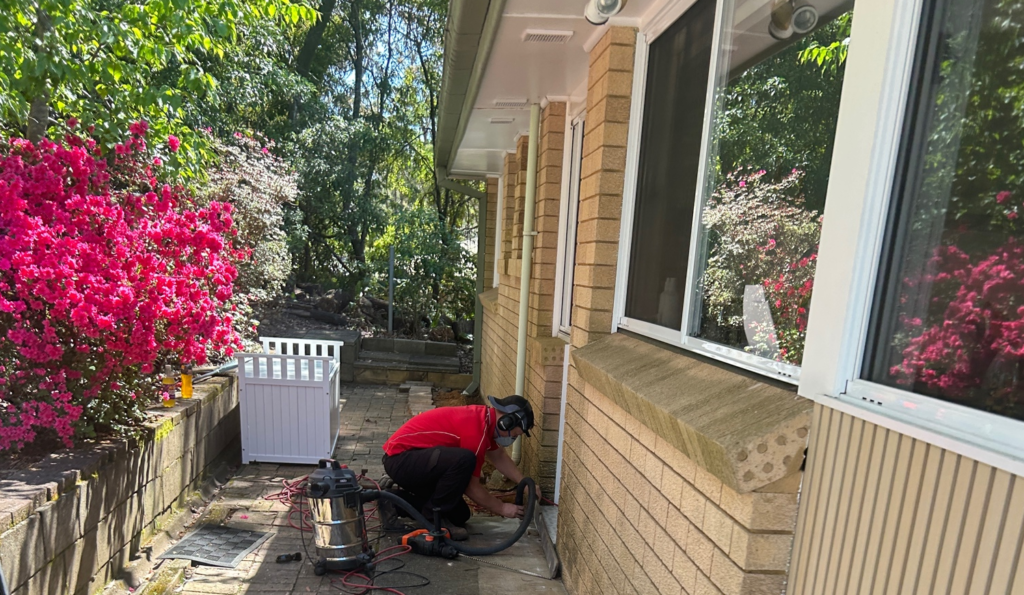
Jason carrying out termite-control work beside a brick home. Treatment selection depends on the property and inspection findings.
- Our family team
Jason & Katie
Jason and Katie are our husband-and-wife team at Pest Control-Blue Mountains. Behind our pest and termite services is a family team you can put a face to, helping households and businesses across the Blue Mountains and Penrith.

Jason and Katie · Our husband-and-wife team

Jason · Part of our family team
Meet Andy & Lucy, our K9 termite dogs
Andy and Lucy are our two K9 termite dogs. These photos show them exploring around a tree with Jason. A K9 search can support a professional termite inspection; any indications need follow-up checks and are not a guarantee that a property is termite-free. Talk to Jason and Katie about whether a K9 inspection suits your property and the available appointments.
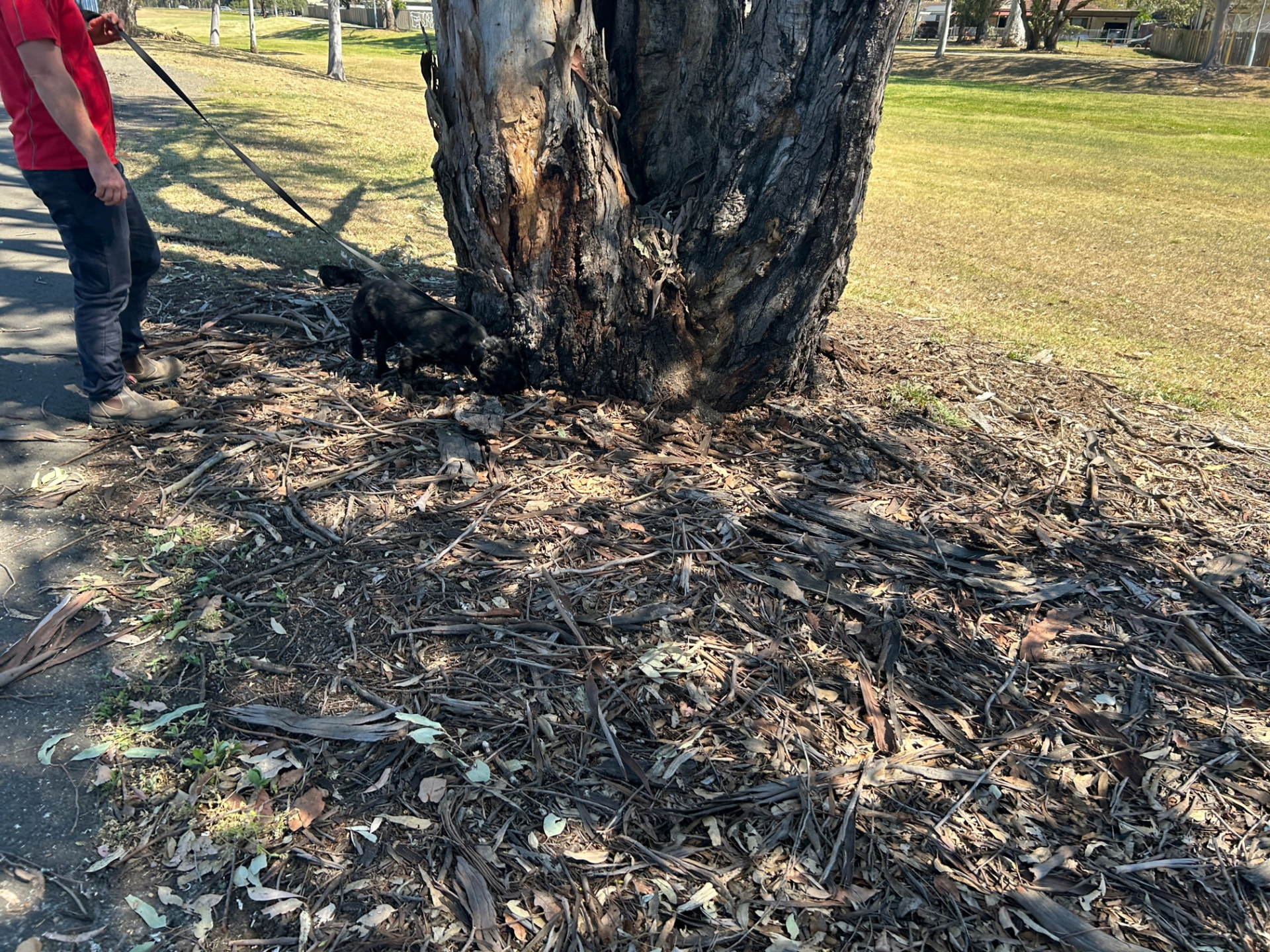
Andy · K9 termite dog
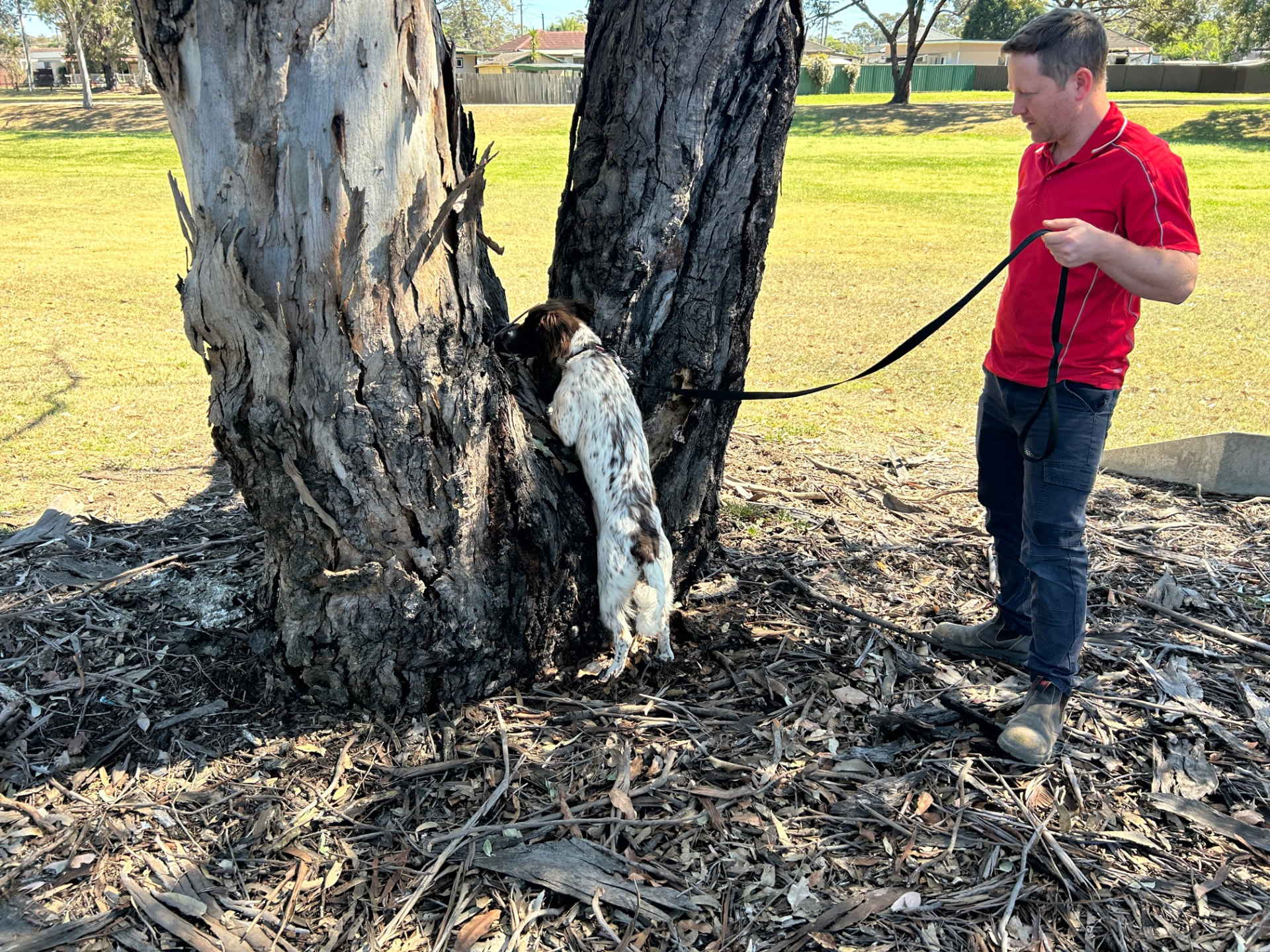
Lucy · K9 termite dog
- Photos from our work
Termite inspections, treatment & baiting
Our own job photos show in-ground monitoring and bait stations, above-ground baiting and signs of termite damage. Ask Jason and Katie about Sentricon and Trelona baiting options and which approach suits your property. Treatment selection and follow-up depend on the inspection findings.
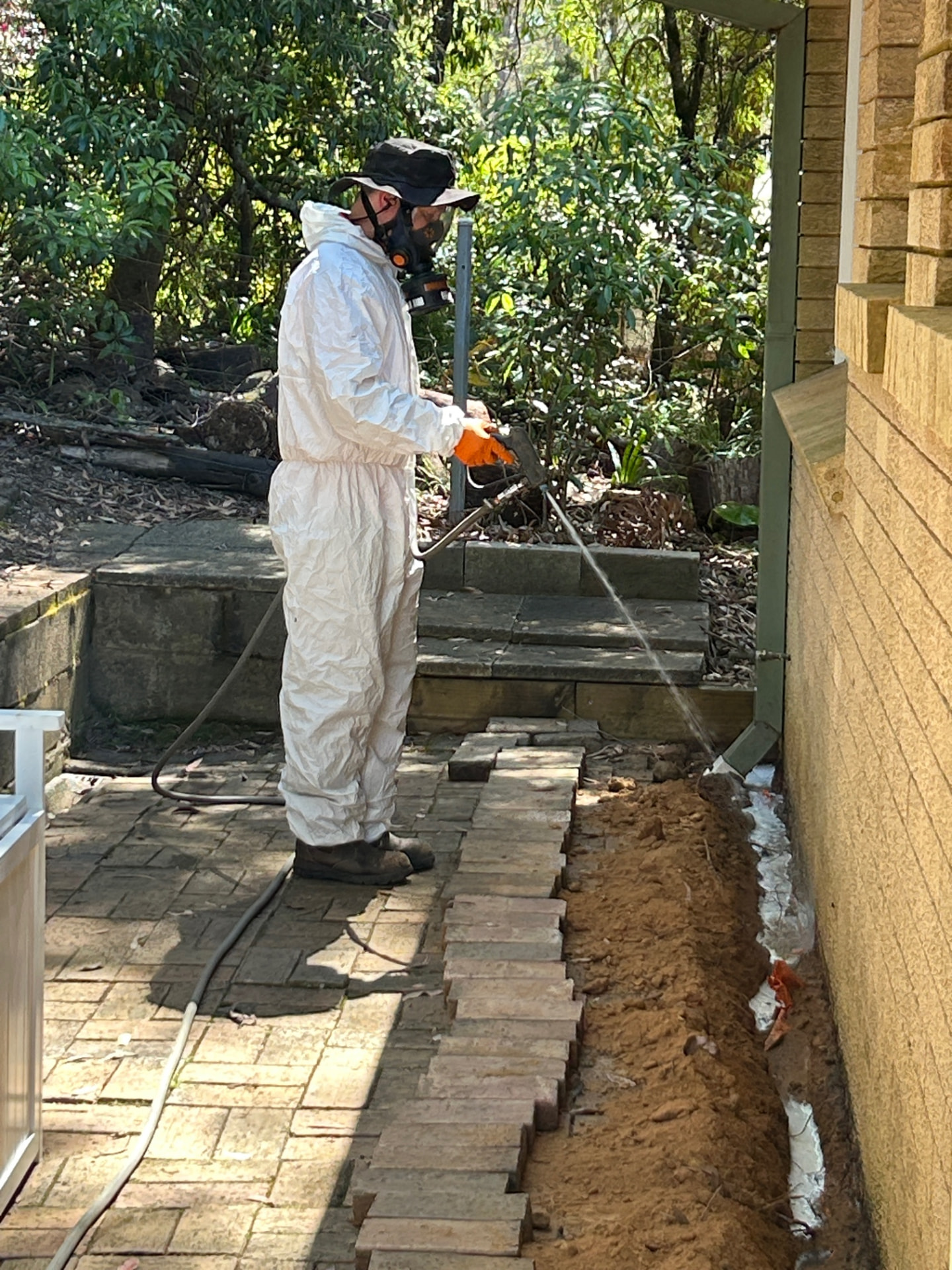
Chemical termite treatment applied to exposed soil beside a brick wall
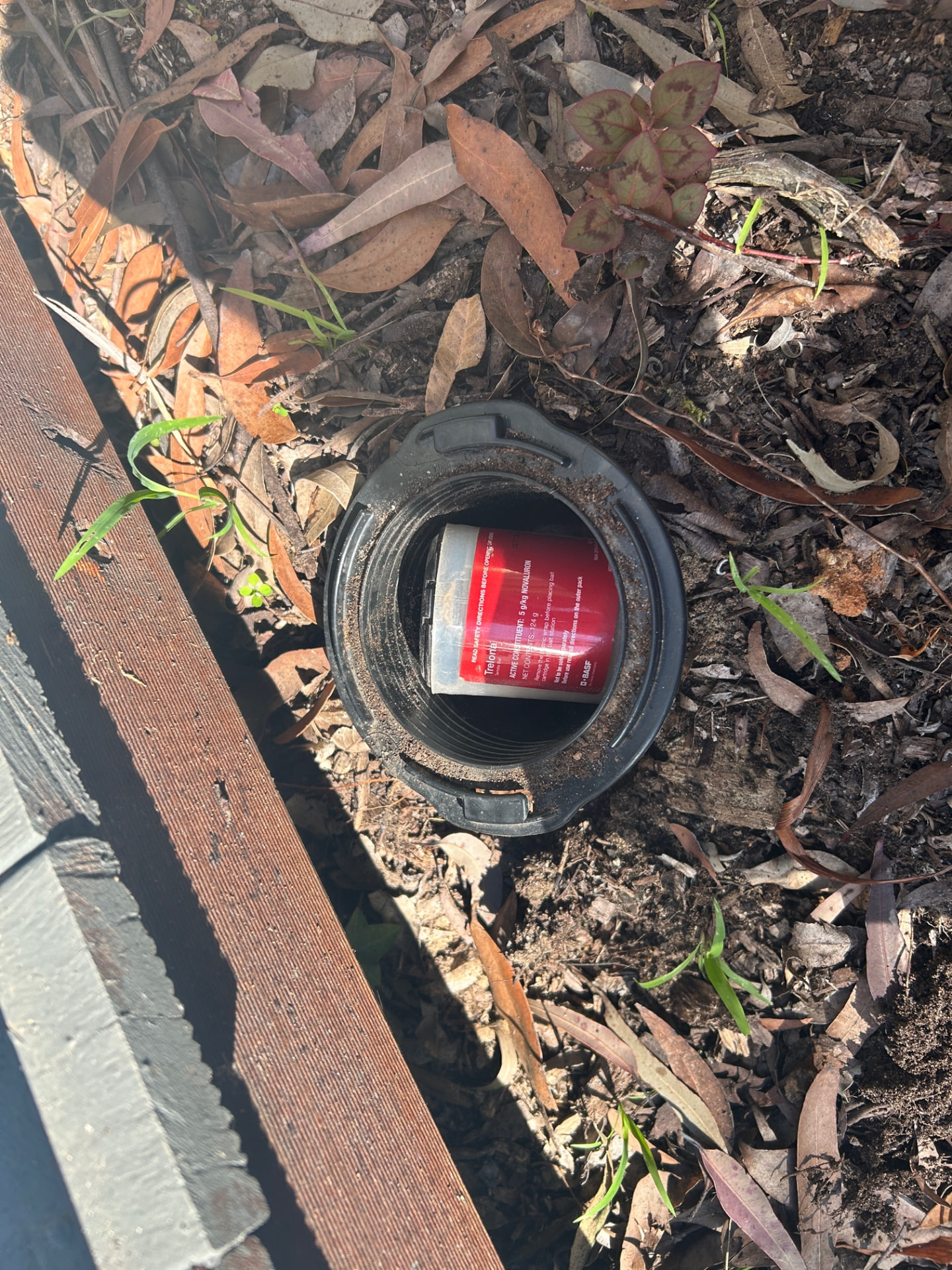
Trelona bait cartridge inside an open garden station
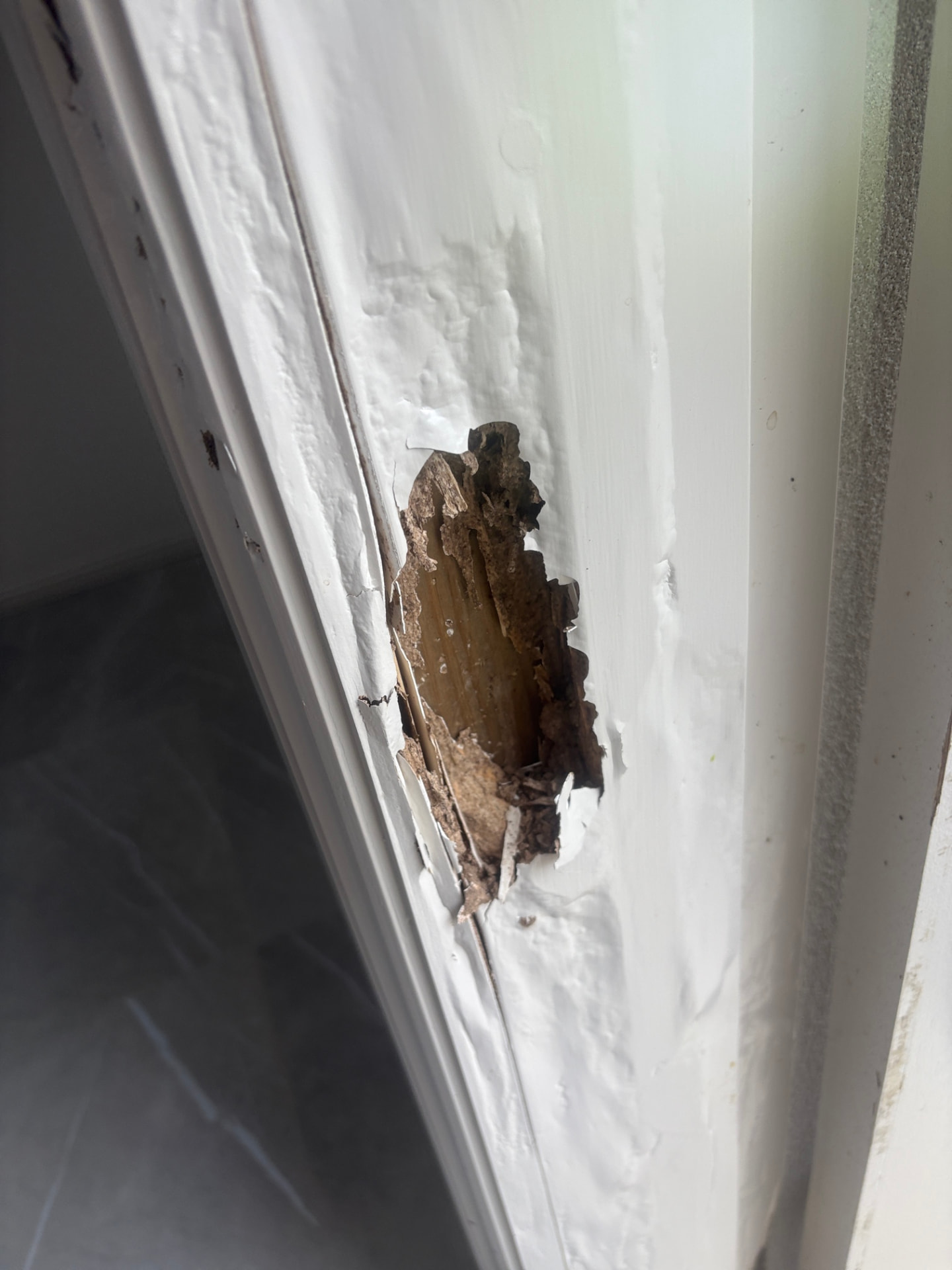
Termite damage exposed in a door frame
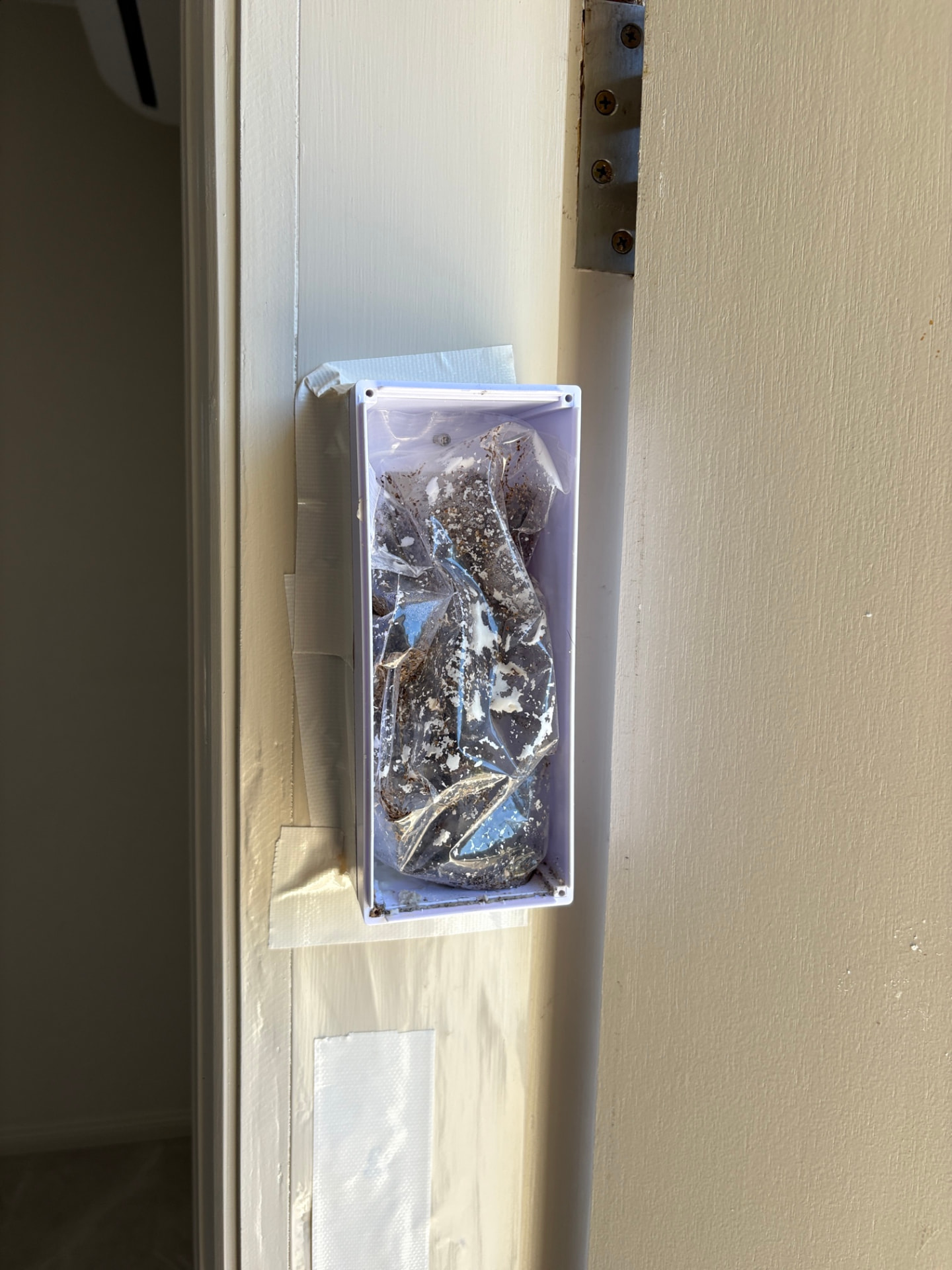
Inside an above-ground termite bait station
Two homes on the same Blue Mountains street can need different termite-management plans. One may have shallow soil over rock, a steep garden and historic stonework that should not be drilled unnecessarily. The next may have an accessible soil perimeter beside brick walls, allowing a properly designed chemical soil treatment. The choice is not simply baiting for old homes and chemicals for new homes. It depends on the termite evidence, construction, treatment access, ground conditions and ability to maintain the system. Pest Control-Blue Mountains explains these differences before recommending work. Jason and Katie can discuss what each method is intended to achieve, where it has limitations and what follow-up your property needs.
Baiting and chemical soil treatment do different jobs
A baiting system uses a registered termite bait, presented in suitable stations, to take advantage of termite feeding and colony behaviour. Common termite baits contain an insect growth regulator that affects development; bait is still a pesticide, not a chemical-free remedy. Chemical soil treatment places a registered termiticide in suitable soil areas associated with potential building entry. Its action depends on the selected product: products must not all be described as repellent barriers. Both methods can form part of termite management, but a station layout and a treated soil zone are not interchangeable. Neither repairs damaged timber, replaces building inspections or guarantees that every concealed entry route has been resolved.
Why rocky Blue Mountains blocks can favour baiting
Shallow soil, exposed sandstone and uneven ground can make a continuous, appropriately installed soil treatment difficult. A property on a steep block around Woodford or Leura may have rock ledges, retaining walls and areas where excavation is restricted. Where those conditions prevent a suitable soil installation, baiting may be worth considering instead. However, rocky ground can also restrict in-ground station placement: stations still need suitable installation points and ongoing access. It is not enough to scatter a few lids wherever digging is easiest. The inspection and proposed layout must explain where stations can be installed, which areas remain limited and whether another treatment approach is needed at active workings.
When accessible soil can support chemical control
Chemical soil treatment may suit a building where the required treatment areas can be reached and the soil and construction allow installation according to the registered product label. Accessible ground beside external walls or within a suitable subfloor can offer treatment opportunities. The supplied photograph shows a technician treating an exposed soil trench next to a brick home; it does not show the entire installation or establish its product. Paths, service lines, foundations, drainage and extensions must be assessed before work. A narrow strip that looks easy to spray is not necessarily a complete management system. We explain the proposed treatment coverage and limitations rather than assuming every brick house can receive an identical chemical treatment.
Concrete paths, decks and extensions change the choice
A house can have accessible soil along one wall and difficult access along another. Concrete paving, attached decks, enclosed additions and retaining walls may interrupt treatment access or conceal possible termite entry. Some installations may require access through paving or other building features, subject to the product instructions and site assessment. Where that would be unsuitable or impractical, baiting or another approach may be considered. Bait stations also need a workable position and cannot simply be placed beneath permanently inaccessible decking. Tell us about extensions and previous renovations. The recommendation should address the whole relevant building footprint, not only the easy-to-reach frontage that happens to appear in a photograph.
Heritage buildings need a plan that respects the fabric
Historic timber, masonry, paths and visitor areas can influence how termite work is planned. Baiting may be considered where reducing disturbance to significant building fabric is important, provided installation and servicing are suitable. That does not mean every heritage building must use bait or that chemical treatment is prohibited everywhere. Conservation requirements, site approvals and the actual construction must be checked. Our documented work includes Hartley Historic Village, Valley Heights Railway Museum and Glenbrook Native Plant Reserve. Those examples show why careful assessment matters; they do not establish government endorsement of Sentricon or Trelona. Another public or heritage site needs its own management discussion rather than an assumed copy of an existing installation.
Active termites may need more than a perimeter system
If termites are already feeding inside a door frame, wall or subfloor, the immediate activity must be assessed as well as the longer-term building-management options. Above-ground baiting may suit accessible, undisturbed workings where termite feeding can be maintained. A targeted registered dust, foam or other application may be considered where the evidence and access support it. Installing perimeter stations does not guarantee that active termites in a building will find those stations promptly. Similarly, treating accessible soil does not by itself prove that concealed activity has been controlled. If you find live termites, avoid household sprays and further disturbance, contact the team and let the inspection guide the sequence of work.
Sentricon and Trelona: compare the system, not just the brand
Our work photographs show Sentricon stations, consumed bait rods and Trelona bait cartridges. These are examples of baiting equipment and observations, not proof that one brand suits every mountain home. The new Trelona photograph shows a cartridge inside an open garden station beside timber edging and leaf litter; visible installation does not establish colony elimination. Ask which registered system is proposed, where it will be installed and how it will be checked. Bait consumption can inform the management record, but a heavily eaten rod alone cannot confirm that all colonies have been controlled. System suitability includes station access, feeding evidence, servicing and the building inspection, not just the name printed on a cartridge.
Water, drainage and sensitive surroundings matter
Before choosing a method, tell us about ponds, water tanks, drains, drainage lines, vegetable gardens, pets and public access. Chemical soil treatment needs site-specific assessment and compliance with the relevant label, including environmental restrictions and application conditions. Baiting also uses a registered pesticide and has its own placement, access and handling requirements. It should not be described as universally harmless. A property near Glenbrook Lagoon or in the Nepean River area must be assessed at its actual address; proximity to a landmark does not automatically require or rule out a treatment. We discuss the selected method’s precautions rather than promising that every product can be used in every sensitive setting.
Slope, moisture and garden changes affect both methods
Water movement, poor drainage and landscaping can influence installation and ongoing management. On sloping blocks, the location of retaining walls and drainage deserves particular attention. A soil treatment can be affected when treated ground is removed or altered by excavation, plumbing repairs or new garden beds. Bait stations can become buried, damaged or inaccessible when paving, planting or decking changes. Neither option is a set-and-forget answer to recurring moisture problems. Repairing leaks, improving suitable drainage and reducing concealed timber-to-soil contact remain important supporting steps. Let Jason and Katie know about planned site work before it begins so its effect on the installed system can be discussed and the management records updated.
Can baiting and chemical treatment be used together?
Some properties need more than one method, but combining methods should have a clear reason. The immediate control of accessible active termites and longer-term management of building entry may involve different work. Any combination must account for product instructions and whether one application could disrupt termite feeding or contaminate a baiting location. More products do not automatically mean better protection. Ask which problem each proposed step addresses, why it is needed and how its result will be checked. A staged plan can be appropriate, but the sequence should be explained. The goal is a maintainable, evidence-based approach, not adding every available treatment to the same quotation.
Compare maintenance and follow-up before comparing price
Baiting requires an agreed servicing process to review station condition, access, termite activity and bait as required by the system. Chemical soil treatment also needs ongoing building inspections and attention to changes that affect treated areas. Do not assume a chemical installation removes future inspection costs, or that baiting comes with the same visit schedule on every site. Ask what the initial quote includes, which return visits are included and what ongoing services cost separately. Timetables depend on the selected system, findings and agreement. Keep treatment records and report new activity. Neither the disappearance of termites from one spot nor a quiet station is, by itself, a guarantee that the property is free of concealed activity.
How we choose a plan for your Blue Mountains property
The assessment brings together accessible termite evidence, species where identifiable, construction, ground conditions, previous treatments and practical maintenance access. A cottage near Springwood village, an established garden in Katoomba and a brick home in Emu Plains can present different constraints; their postcode does not choose the product. Ask us why baiting or chemical control is recommended for your building, what alternatives were considered and what limitations remain. We explain preparation, precautions, follow-up and owner responsibilities before work is agreed. Contact Jason and Katie with your address, any termite findings and existing system records. A suitable recommendation should make sense for your property today and remain practical to inspect and maintain after the initial treatment.
Termite Treatment Options: local service areas
Other pest services
See our heritage-site termite work, explore the complete suburb and service directory, or contact Jason and Katie about your property.
Find out whether baiting or chemical treatment suits your site.
Talk to Jason and Katie about pest control for your property in the Blue Mountains or Penrith.
Need help at your property?
Talk to a local technician about treatment for your home or business.
Pest Services
- Cockroach Control →
- Rodent Control →
- Spider Control →
- Wasp Control →
- Termite Inspections →
- Termite Treatments →
- Termite Barriers →
- K9 Termite Inspections →
- Termite Control Blue Mountains & Penrith →
- Pre-Purchase Termite Inspections →
- Found Live Termites? →
- Termite Treatment Options →
- Termite Baiting & Monitoring →
- Targeted Termite Treatment →
- Termite Prevention & Risk Reduction →
- Residential Pest Control →
- Commercial Pest Control →
Blue Mountains Areas
- Start here
Explore pest solutions
Learn about our other services across the Blue Mountains and Penrith.