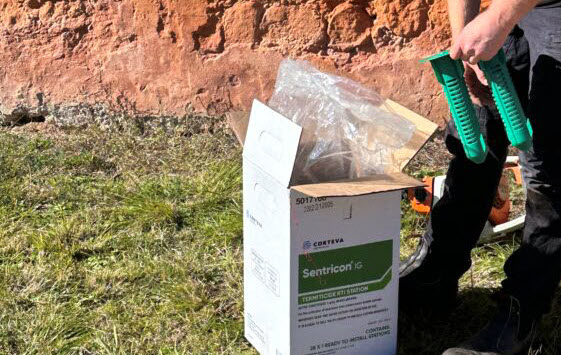
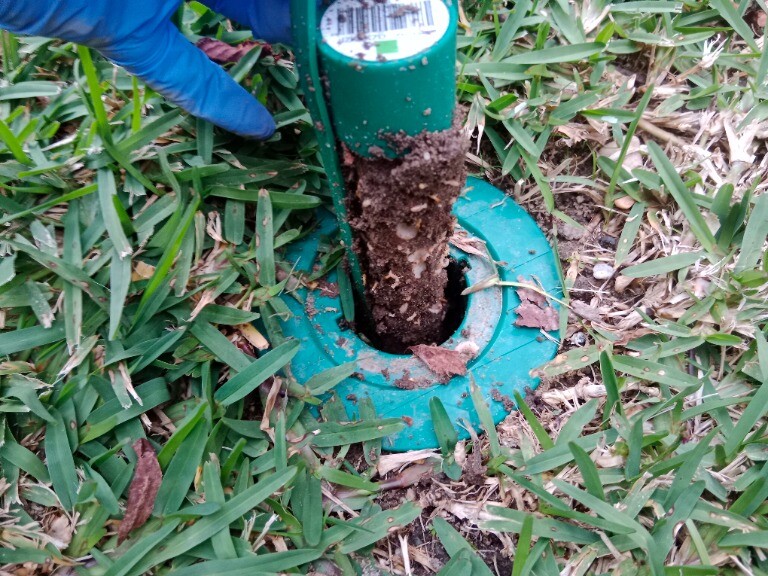
Jason preparing Sentricon stations. Baiting and monitoring arrangements depend on the property and the selected system.
Jason & Katie
Jason and Katie are our husband-and-wife team at Pest Control-Blue Mountains. Behind our pest and termite services is a family team you can put a face to, helping households and businesses across the Blue Mountains and Penrith.
Jason and Katie · Our husband-and-wife team
Jason · Part of our family team
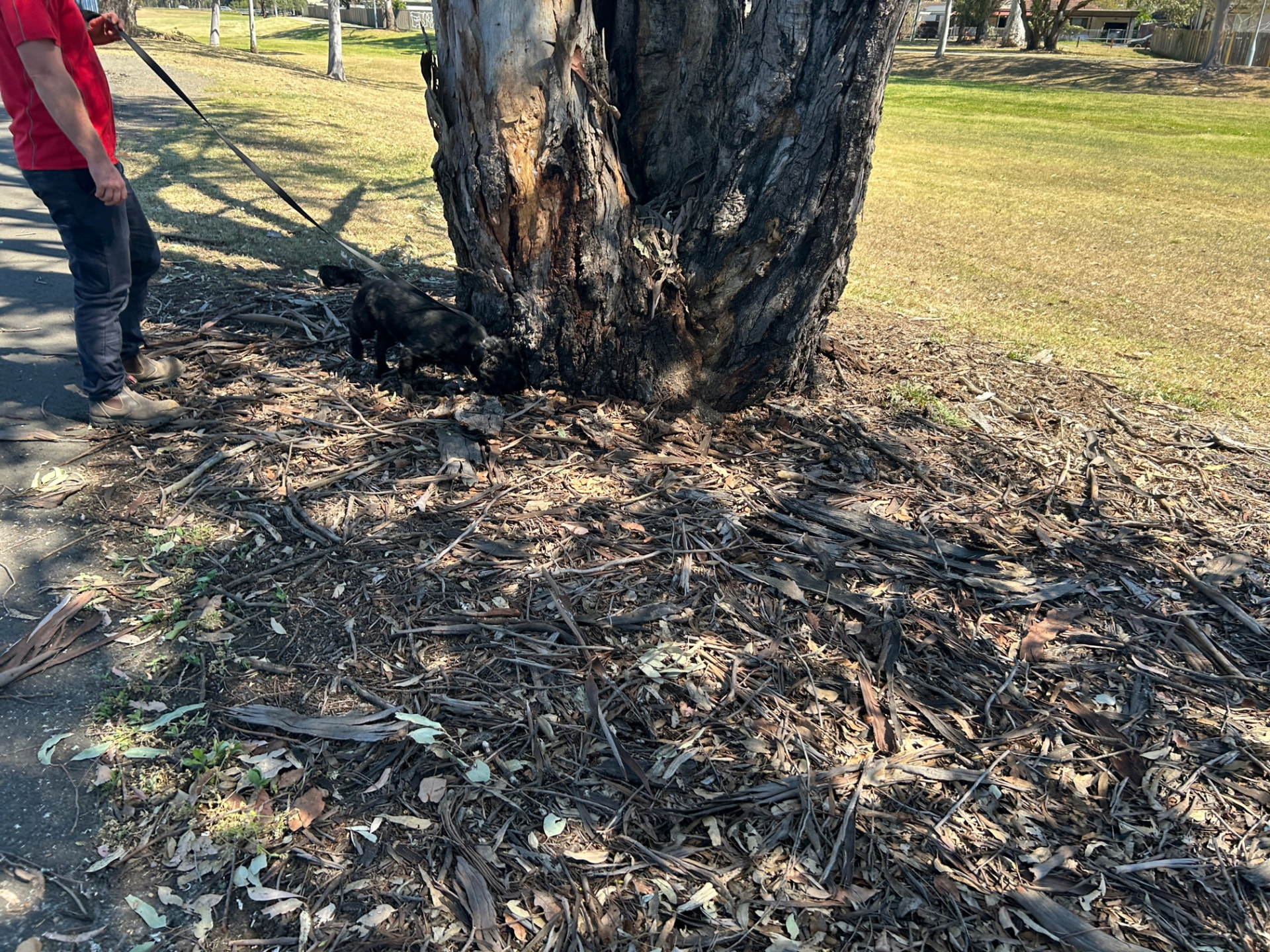
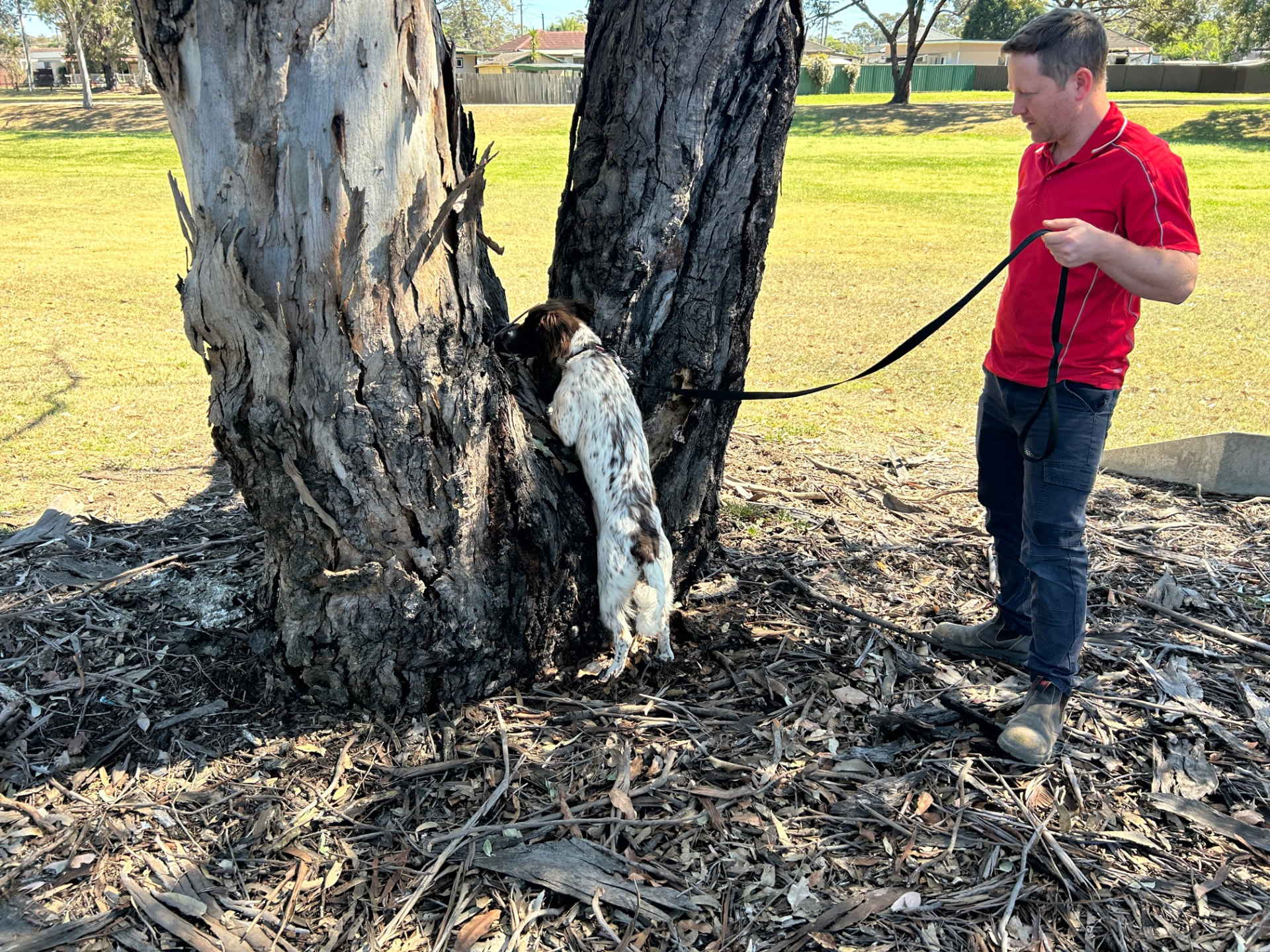
Meet Andy & Lucy, our K9 termite dogs
Andy and Lucy are our two K9 termite dogs. These photos show them exploring around a tree with Jason. A K9 search can support a professional termite inspection; any indications need follow-up checks and are not a guarantee that a property is termite-free. Talk to Jason and Katie about whether a K9 inspection suits your property and the available appointments.
Termite inspections, treatment & baiting
Our own job photos show in-ground monitoring and bait stations, above-ground baiting and signs of termite damage. Ask Jason and Katie about Sentricon and Trelona baiting options and which approach suits your property. Treatment selection and follow-up depend on the inspection findings.
Checking an in-ground termite bait station
Jason preparing Sentricon termite bait stations
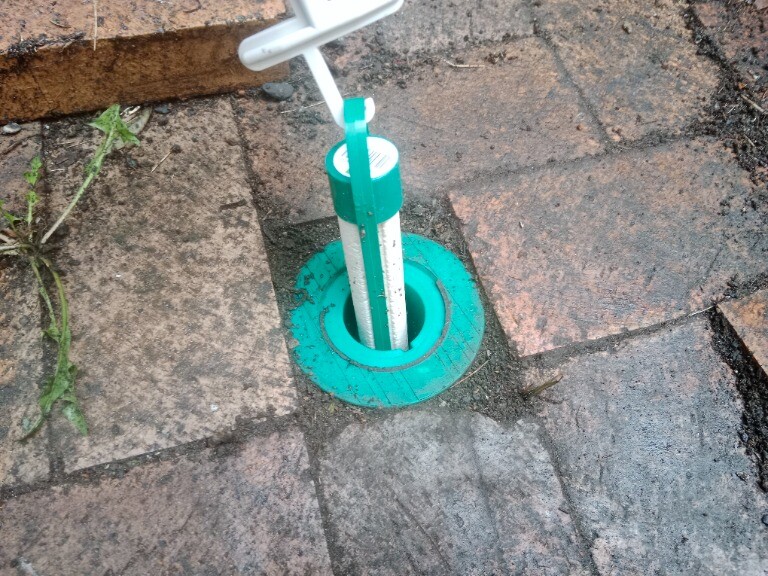
Bait cartridge inside a station in paving
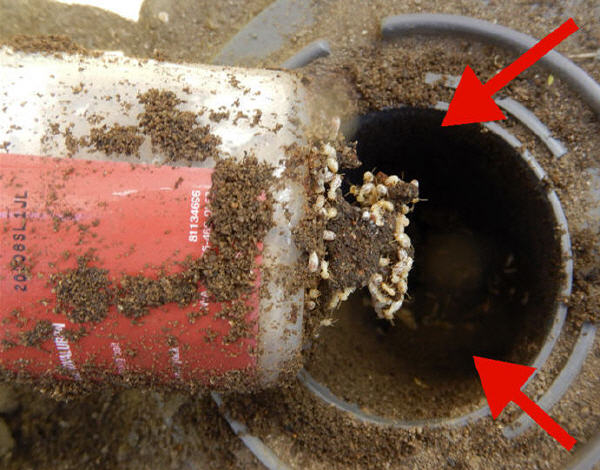
Termite activity on a Trelona bait cartridge
Termite baiting is a management process, not simply a set of green lids placed around a house. Station selection, installation, termite feeding and ongoing checks all influence how the system is used. Pest Control-Blue Mountains discusses Sentricon and Trelona options with owners across the mountains and Penrith, guided by inspection findings and the requirements of the proposed system. Our supplied job photos show station checks, bait cartridges and above-ground installations, making the work easier to understand. This page explains what baiting and monitoring involve, how they differ and which questions to ask about maintenance before agreeing to a management plan for your property.
Baiting and monitoring are related but different
Monitoring is the process of checking for termite evidence and reviewing station condition, access and activity. Baiting uses an appropriate registered bait as part of termite management. A monitoring point is not automatically a currently active bait treatment, and a bait station does not remove the need to inspect the building. Ask which function each part of the proposed system performs and how the service arrangement works. Terminology can vary between systems, so clear explanations matter. The owner should understand what is installed, what is checked and what action is proposed if termites are found, rather than assuming every station always contains the same material.
In-ground stations around a property
In-ground stations are installed at suitable locations as part of a planned layout. Soil, paving, drainage, access and the building footprint can affect where they can go. Their presence may help create managed inspection points around the property, but station placement should follow the system requirements rather than a random pattern of garden locations. Tell us about underground services, planned landscaping and areas that cannot be accessed regularly. A station that is buried under mulch or enclosed by a new deck may become difficult to service. The proposed layout needs to be practical for both installation and ongoing inspection.
Above-ground baiting at active workings
Above-ground stations may be considered where accessible termite activity supports their use. Our photos show stations fitted beside door and window frames, illustrating that baiting is not limited to the garden perimeter. Installation needs to protect termite interaction and follow the chosen product instructions. Do not open or move an attached station to check it yourself, even if it appears quiet. Disturbing the station can affect feeding and the evidence collected at the next service. Ask where the station will be fitted, how access will be arranged and what precautions occupants should follow around the installation while the management work continues.
How termites interact with bait
Suitable termite bait is used to take advantage of termite feeding and colony behaviour. The response depends on the bait, species, feeding activity and site conditions; it is not an immediate knockdown treatment like spraying an exposed insect. Visible bait consumption is useful evidence, but it must be interpreted within the monitoring record. Different stations may show different activity levels. We do not promise a fixed elimination date for every colony. Ask how progress is assessed and how decisions about replacement, continued baiting or another management step will be made. The aim is an evidence-based review, not a countdown based on a generic timetable.
Understanding Sentricon options
Sentricon is represented in the supplied photographs of Jason preparing stations and of bait rods inspected during servicing. Those photographs explain aspects of the work but do not mean the same installation should be used at every address. Ask which Sentricon configuration is proposed, how it suits the property and what maintenance is required. Installation and servicing should follow the applicable system and product instructions. A completely eaten rod indicates feeding at that station; it does not alone prove that every termite colony around a building has been eliminated. Records and follow-up are needed to interpret activity and guide the next service steps.
Understanding Trelona bait activity
The supplied Trelona photo shows visible termite activity on a bait cartridge. It is a useful close-up of feeding evidence, not a guarantee of a particular treatment outcome. Where Trelona is considered, ask about the station arrangement, bait checks and the servicing agreement for your site. Comparing Trelona with another system requires more than looking at cartridge shape or product branding. The relevant questions include suitability, access, maintenance and how activity is recorded. We explain the proposed approach in relation to the property findings rather than claiming that a single product is preferred or endorsed for all homes and public sites.
What happens during station checks
A service visit can involve assessing station access and condition, looking for termite evidence and reviewing bait or monitoring material as appropriate to the system. Findings help guide further work and the next checks. Tell the team about any disturbance since the previous visit, including gardening, paving changes or pets damaging a lid. Do not add your own materials, spray inside stations or replace components without advice. A clear servicing history helps explain changes in activity. Ask what records will be provided and how findings are communicated, so monitoring remains an understandable part of your property management rather than an unexplained recurring appointment.
Bait replacement and interpreting consumption
Bait may require attention or replacement according to the system instructions and observed conditions. The museum montage supplied for this website shows a heavily eaten Sentricon rod alongside a fresh replacement. It demonstrates the physical evidence of consumption and replacement, not a universal interval for changing bait. Moisture, termite interaction and station condition may also influence servicing decisions. A homeowner should not decide whether a station is working based only on a quick glance under the lid. Leave the checks to the agreed service process and ask how the observed consumption relates to the broader assessment of activity at the property.
Heritage sites and careful site management
Jason carries out termite work at Valley Heights Railway Museum, and the business also treats Hartley Historic Village and Glenbrook Native Plant Reserve. Heritage and public-facing locations can require careful attention to visitor access, significant fabric and site operations. Supplied photos show the relevant sites and termite-management work, but they do not establish government endorsement or a requirement to use one bait brand. A suitable plan considers the actual building and site constraints. Read the heritage termite-control page for the documented site examples, and discuss any conservation, access or operational requirements when arranging an assessment of another property.
Keeping stations accessible around your home
Once a system is installed, protect access to the service points. Let the team know before installing a path, extending a deck, raising garden beds or moving soil around walls. These changes can affect stations and building entry conditions. Keep a copy of the system information with your maintenance records and make sure tenants or gardeners know not to tamper with components. In bushland settings around Faulconbridge, Hazelbrook and Wentworth Falls, leaf litter and garden growth may obscure lids over time. The practical responsibility is to maintain access and report changes, not to open stations independently or assume that hidden lids need no attention.
A bait system does not replace building inspections
Termites may approach or affect a building through routes that cannot be understood by examining perimeter stations alone. Regular professional inspections remain part of responsible management, with their scope and timing discussed for the property and system. Moisture issues, timber-to-soil contact and concealed access still need attention. A station layout also does not repair damage or determine structural safety. Homes in Penrith, Emu Plains, Cranebrook and Glenmore Park have varied construction and outdoor features, so inspection findings should guide the plan. Treat the baiting system and building assessment as complementary tasks rather than choosing one and forgetting the other.
Before booking a baiting and monitoring service
Tell Jason and Katie whether you have active termites, existing stations or a system that has missed servicing. Provide any available installation documents and maintenance records. Mention the building layout, paving, pets and planned landscaping so access and suitability can be discussed. Ask what the initial work includes, how ongoing visits are arranged and which responsibilities remain with the owner. Pricing and appointment availability should be confirmed for the proposed scope. We can then explain a realistic baiting and monitoring plan, without presenting one station type or one servicing timetable as the automatic answer for every Blue Mountains and Penrith property.
Termite Baiting & Monitoring: local service areas
Other pest services
Discuss a termite baiting and monitoring plan.
Talk to Jason and Katie about pest control for your property in the Blue Mountains or Penrith.