Targeted Termite Treatment in the Blue Mountains & Penrith
Focused management of accessible active termite workings, with method selection, precautions and follow-up based on your inspection findings.
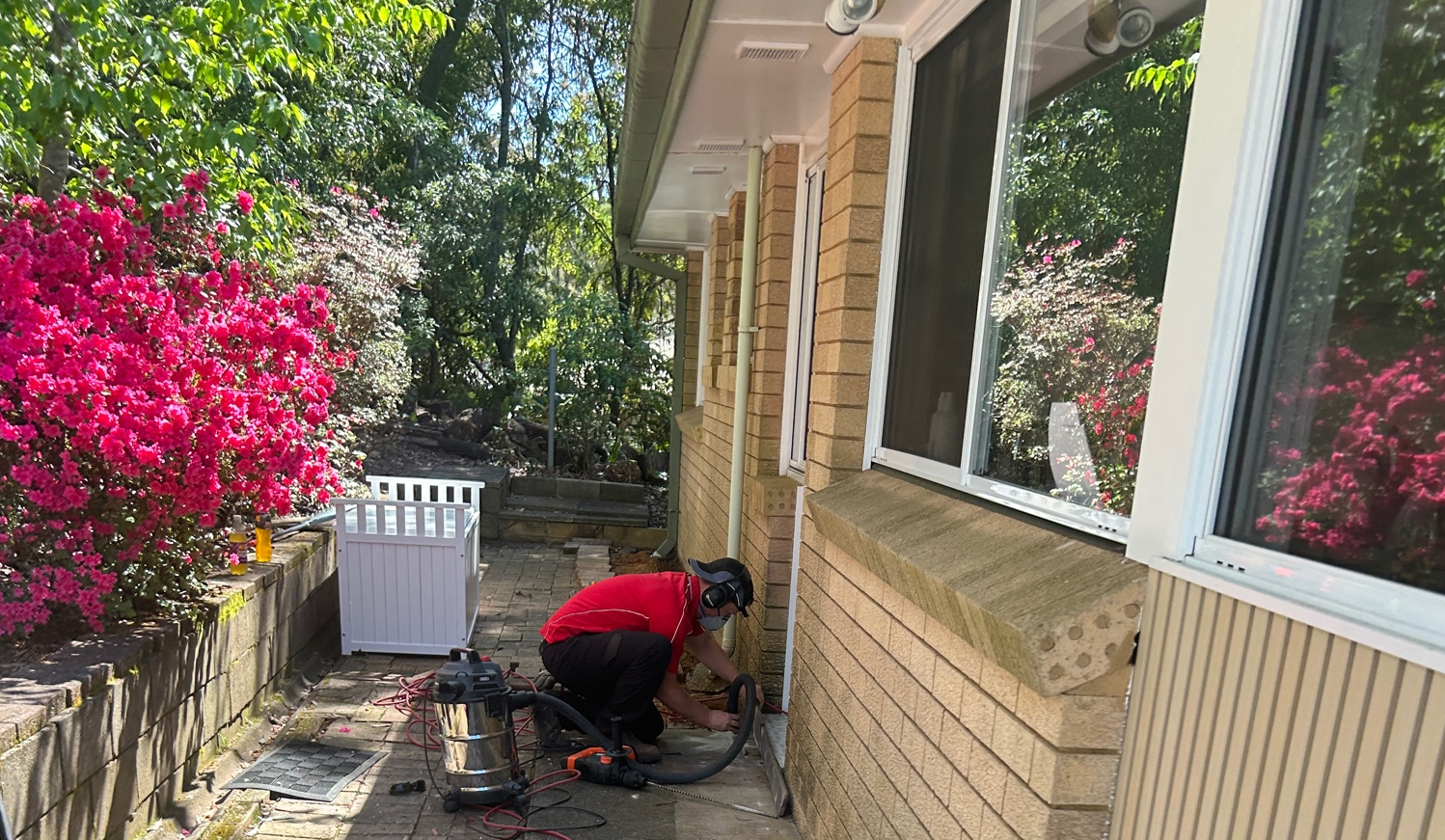
Jason carrying out termite-control work. This job photo does not establish which application is suitable at another property.
- Our family team
Jason & Katie
Jason and Katie are our husband-and-wife team at Pest Control-Blue Mountains. Behind our pest and termite services is a family team you can put a face to, helping households and businesses across the Blue Mountains and Penrith.
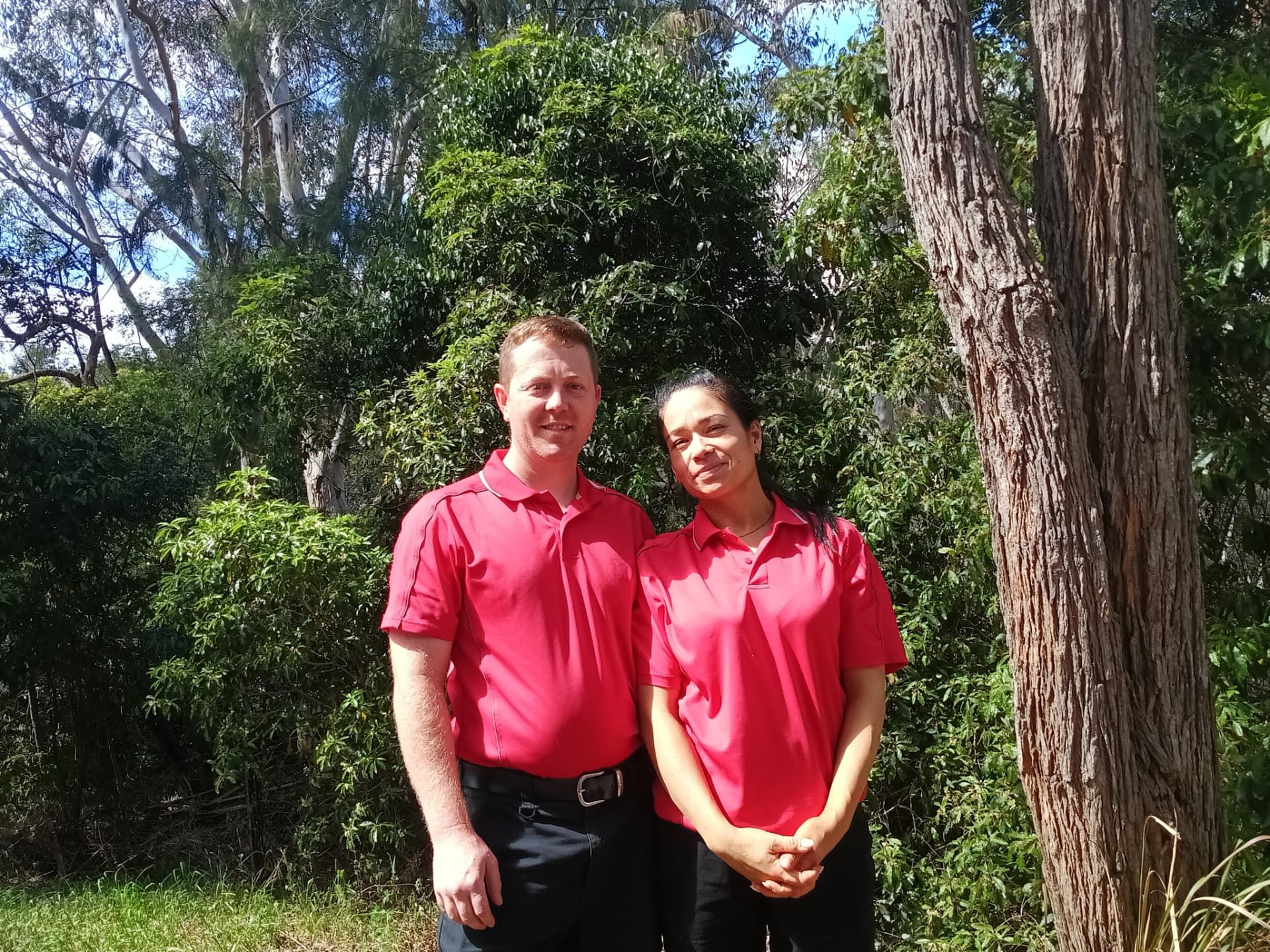
Jason and Katie · Our husband-and-wife team
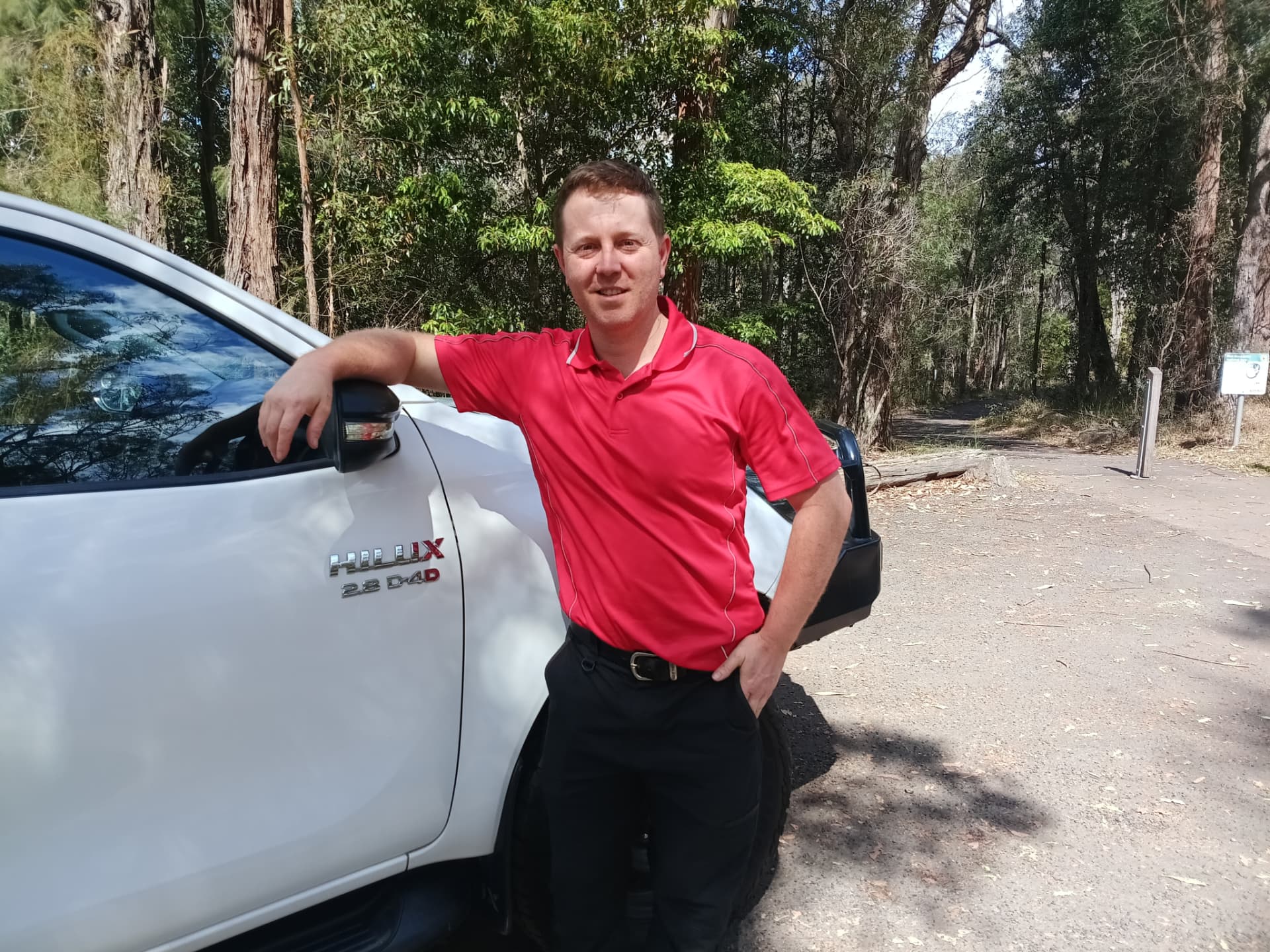
Jason · Part of our family team
Meet Andy & Lucy, our K9 termite dogs
Andy and Lucy are our two K9 termite dogs. These photos show them exploring around a tree with Jason. A K9 search can support a professional termite inspection; any indications need follow-up checks and are not a guarantee that a property is termite-free. Talk to Jason and Katie about whether a K9 inspection suits your property and the available appointments.
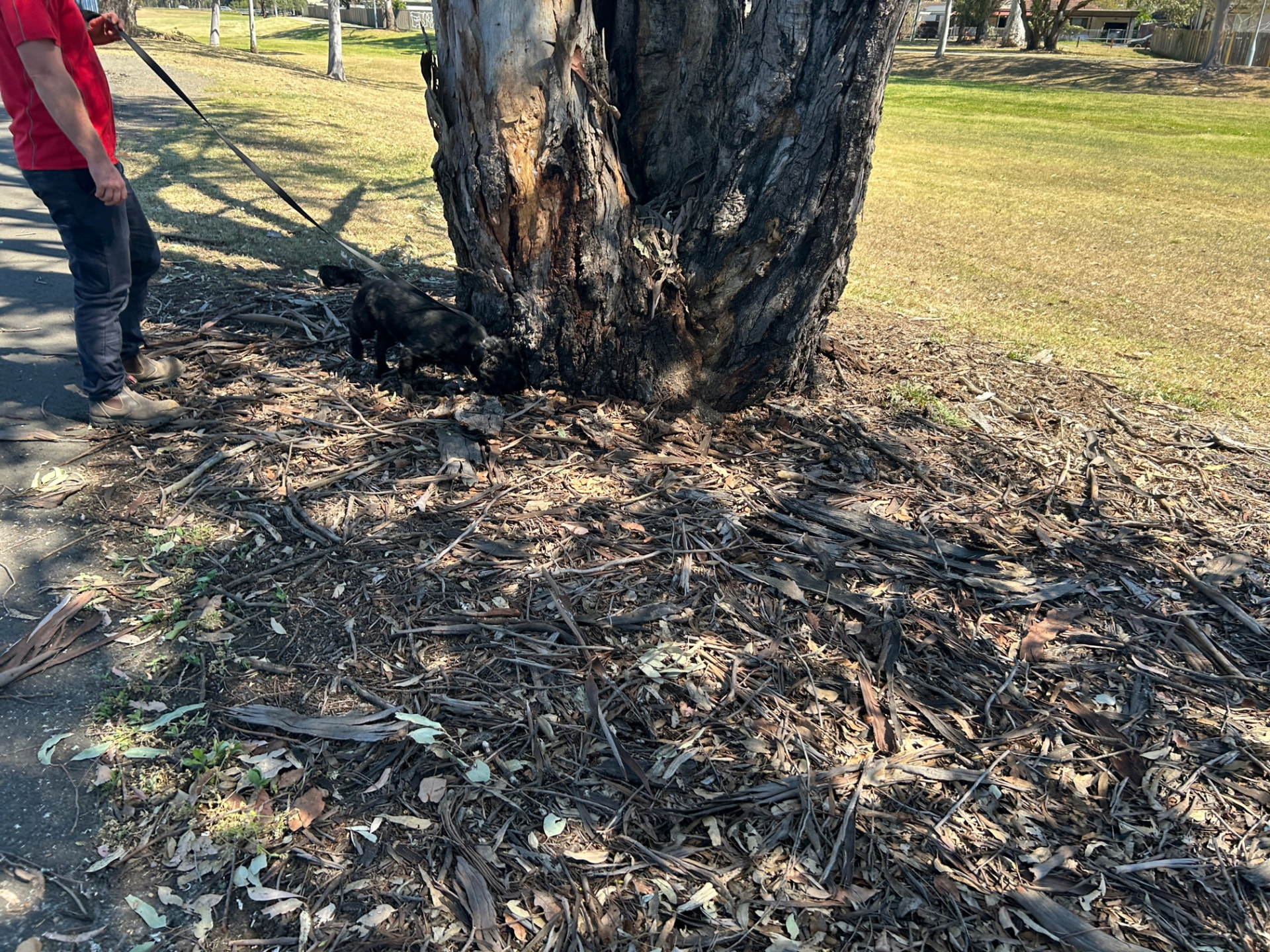
Andy · K9 termite dog
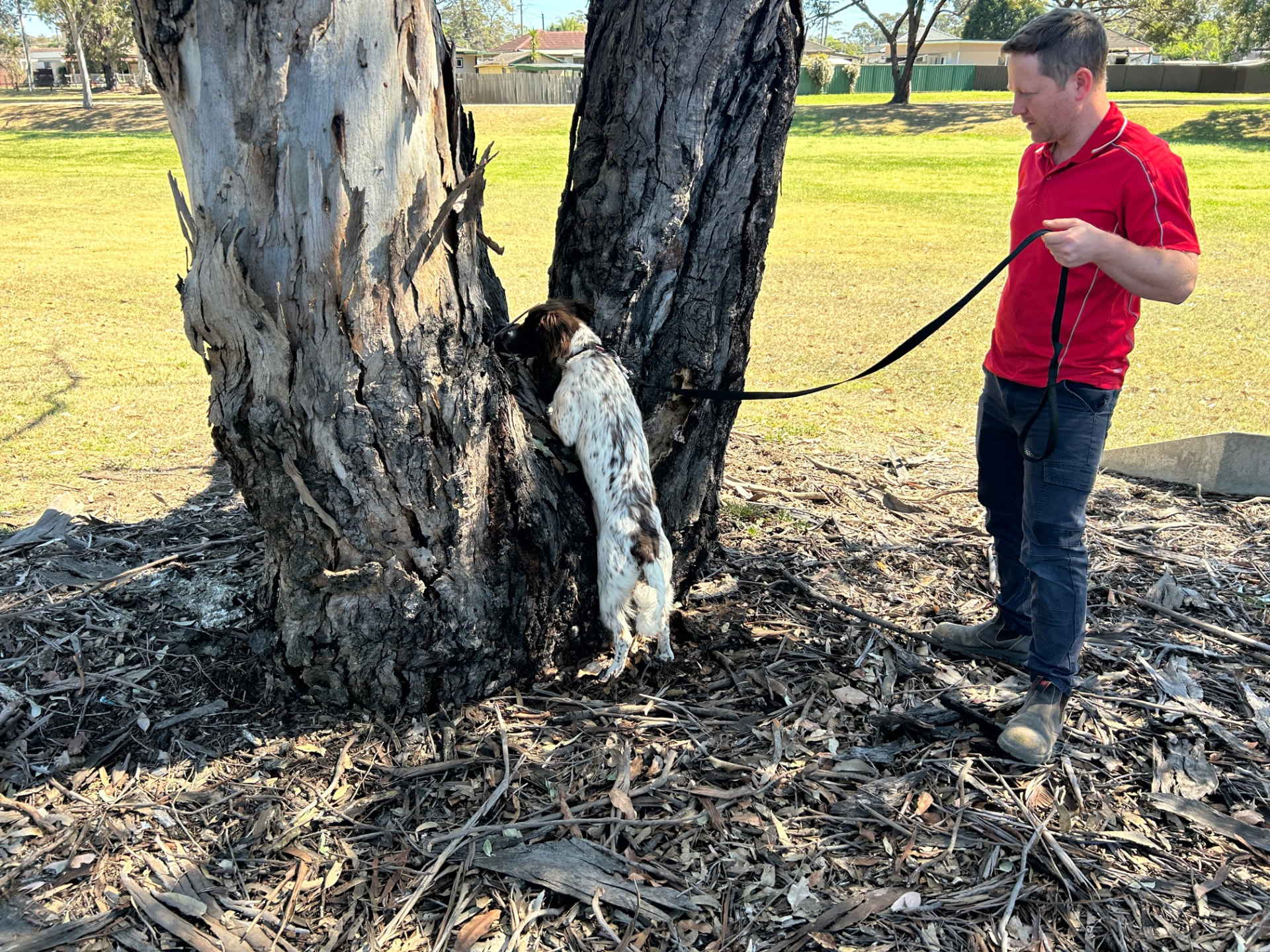
Lucy · K9 termite dog
- Photos from our work
Termite inspections, treatment & baiting
Our own job photos show in-ground monitoring and bait stations, above-ground baiting and signs of termite damage. Ask Jason and Katie about Sentricon and Trelona baiting options and which approach suits your property. Treatment selection and follow-up depend on the inspection findings.
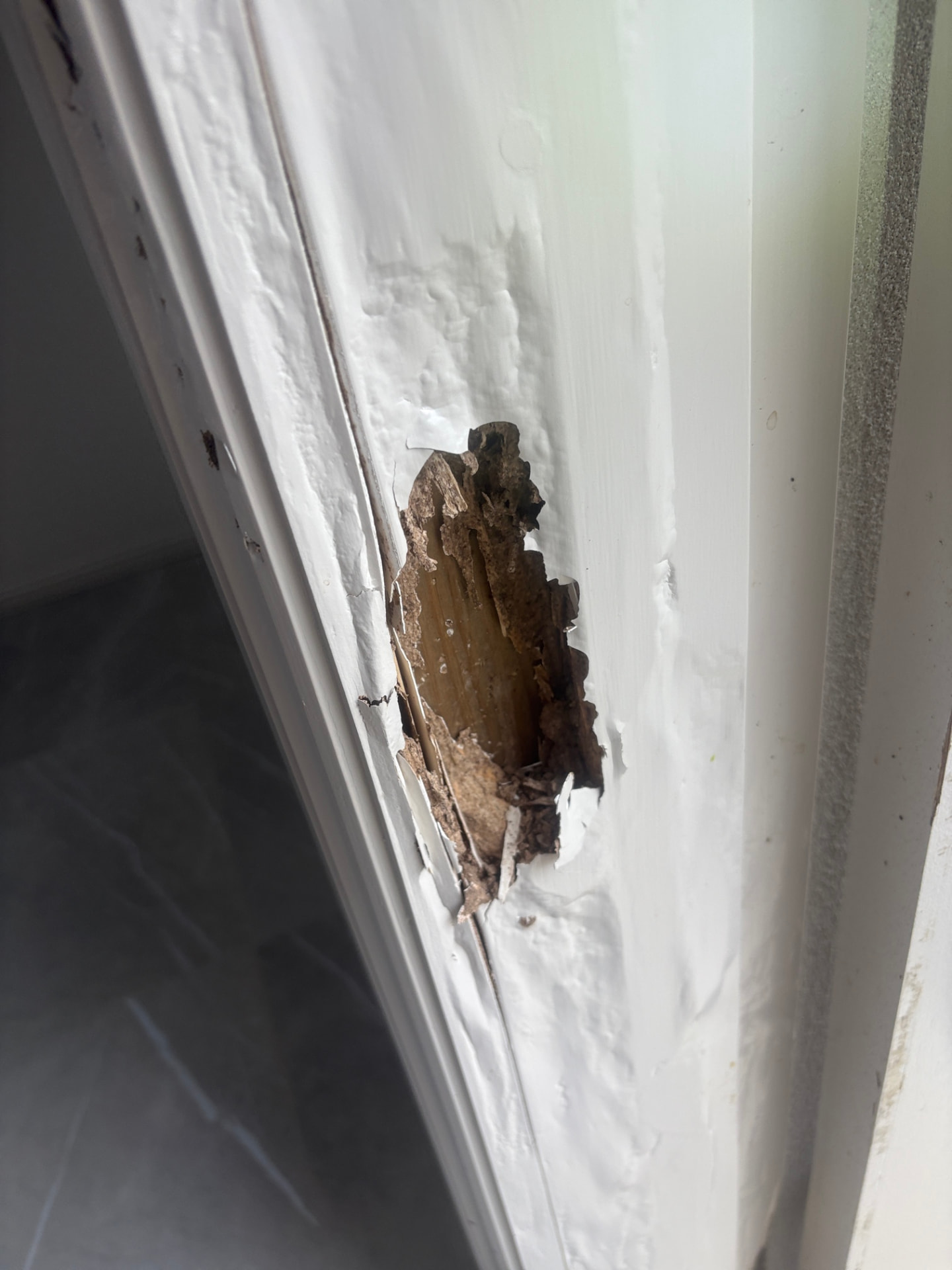
Termite damage exposed in a door frame
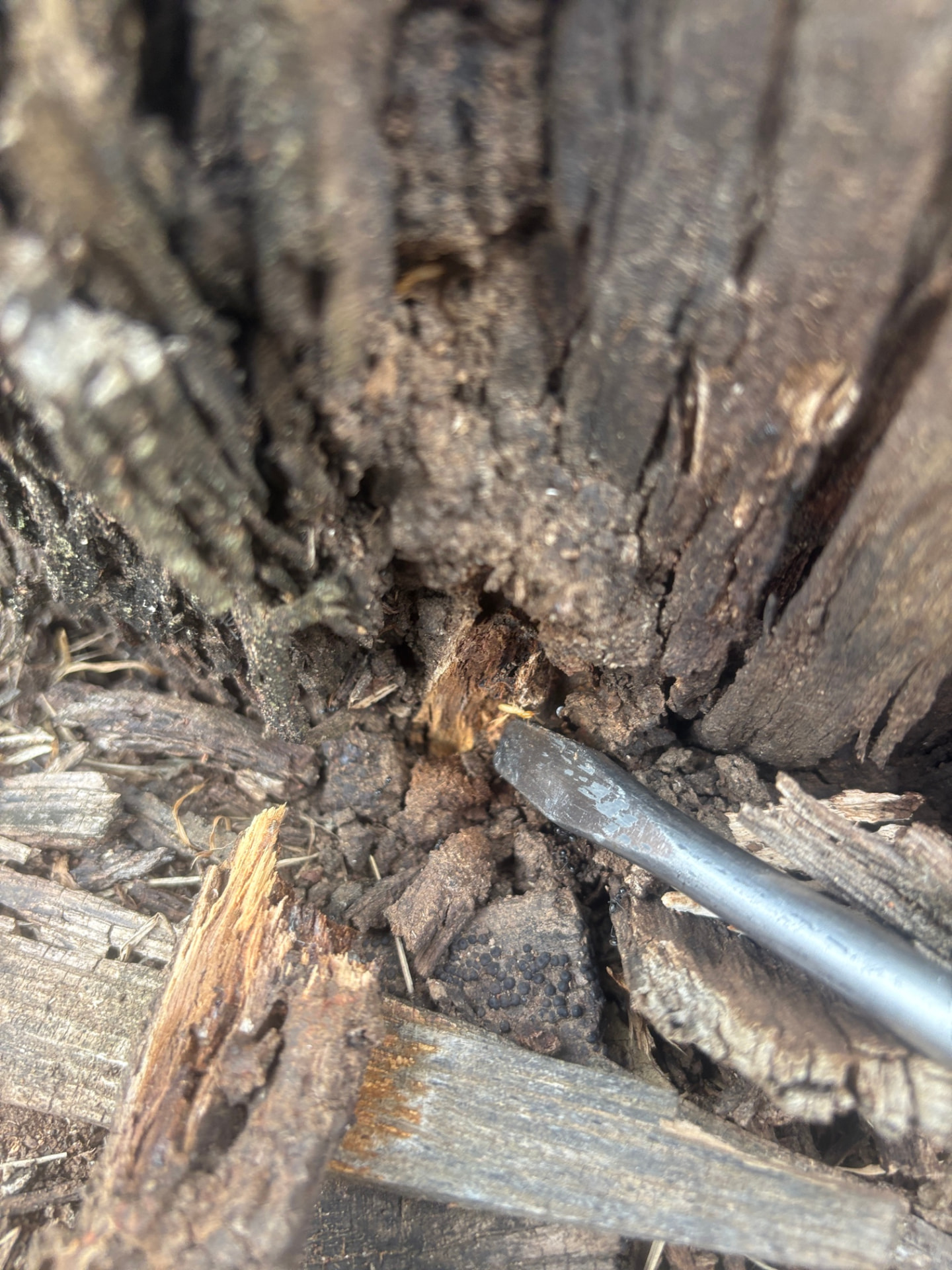
Close inspection of damaged timber at a tree
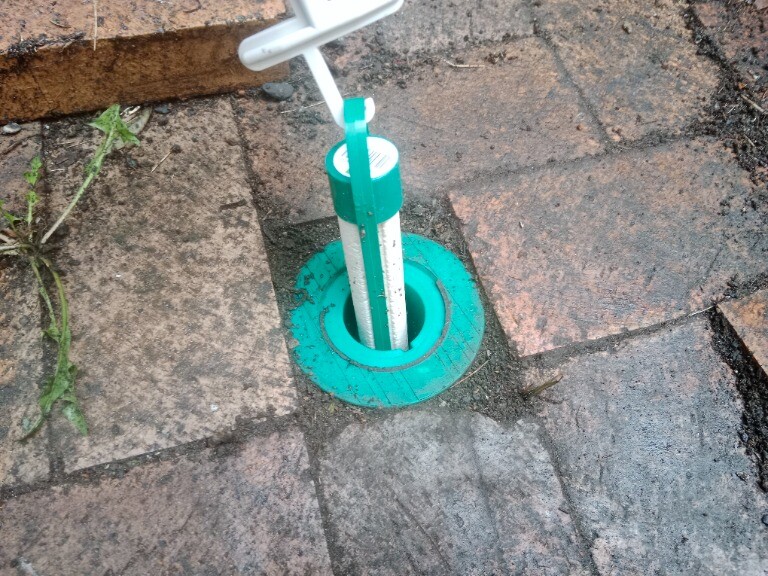
Bait cartridge inside a station in paving
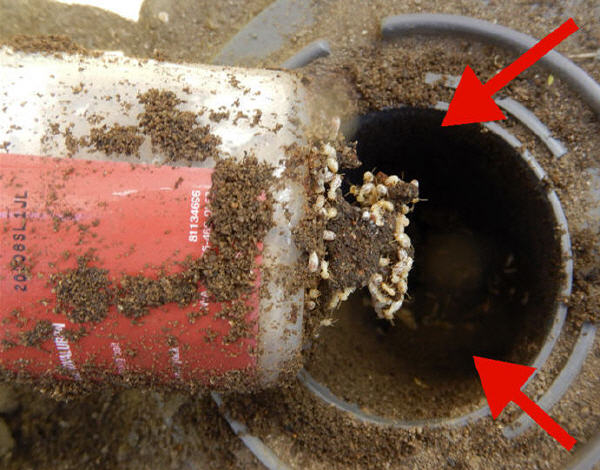
Termite activity on a Trelona bait cartridge
Targeted termite treatment focuses on particular accessible activity rather than treating every property as if it needs the same perimeter installation. It may be considered when active workings, a located nest or another defined treatment point can be assessed and reached safely. The aim and method depend on the inspection findings and the selected registered product. Pest Control-Blue Mountains explains where focused treatment fits, what it cannot establish and why follow-up still matters. This is not a do-it-yourself guide to applying dust or foam. It is a practical introduction for owners who want to understand a professional recommendation before agreeing to work at their home or business.
What makes a treatment targeted?
A targeted approach is directed at an identified treatment opportunity, such as accessible active workings, rather than automatically applying the same method around the whole building. The target must be supported by evidence and a suitable application method. The visible damage alone may not provide that opportunity: old workings, inaccessible timber or disturbed insects can change the assessment. Ask what the proposed application point is and what the treatment is intended to achieve. Focusing the work does not mean ignoring the rest of the property. The wider inspection remains important for understanding entry conditions, other activity and the need for ongoing building management.
Inspection evidence comes before application
Before selecting a focused treatment, the inspector needs to assess accessible evidence and relevant construction details. Live termites, mud workings and damaged timber provide different information, and identification can affect the recommendation. Access limitations must be acknowledged, particularly in enclosed walls and low subfloors. Previous sprays or repair work may also influence the approach. We explain which observations support a direct treatment and which questions remain unresolved. If the evidence does not suit the method, another option may be more appropriate. A targeted application is not simply offered because it sounds smaller, faster or cheaper than a broader management plan.
Direct applications and registered product instructions
Dust, foam and other termiticide applications can have specific uses and restrictions. Their suitability depends on the product instructions, termite evidence, access and site conditions. They should not be treated as interchangeable household sprays. The application may aim to affect termite activity beyond the immediate visible spot, but that aim does not remove the need to assess the result. We discuss the relevant approach without promising that one application always reaches every colony. Tell the team about occupied spaces, pets and sensitive areas before work is planned. Preparation and precautions should be explained for the selected method rather than assumed from a general product category.
Why undisturbed workings can matter
Accessible active workings may provide useful conditions for certain treatment methods. Pulling them apart or spraying the insects can interfere with those conditions and change the evidence available to the inspector. If you discover termites, stop further disturbance and contact us. Do not drill exploratory holes or open walls in an attempt to prepare the site yourself. If repair work has already exposed an area, explain what happened and leave remaining evidence alone where safe. We can discuss whether the existing access is suitable or whether further assessment is needed. The priority is a controlled evaluation, not creating more openings before the first visit.
Targeted treatment versus above-ground baiting
Direct application and above-ground baiting can both involve a specific active location, but they are not the same process. A direct treatment applies an appropriate product at the assessed treatment point. Above-ground baiting establishes a station where termite interaction can be maintained and reviewed. The choice depends on the evidence, access, product requirements and monitoring arrangements. Ask why one approach is recommended and whether another might be considered if conditions change. Our separate baiting and monitoring page explains the station-based process in more detail. A comparison should make the purpose and follow-up clear rather than describing all locally applied treatments as identical.
A located nest may offer a defined treatment point
Where a nest is positively assessed and can be reached safely, focused nest treatment may form part of the plan. However, nests are not always found, and a hollow tree or damaged stump should not be assumed to contain the colony affecting a home. Tree safety may require an arborist and separate advice. The building should also be assessed, because a treated nest does not prevent unrelated termite activity later. Ask what evidence links the finding to the management recommendation and what follow-up will be carried out. The treatment of one location should be explained within the broader property assessment rather than presented as universal protection.
What targeted treatment does not provide
A focused application does not automatically install a complete termite management system around the building, repair damaged timber or prove that inaccessible spaces are clear. Those are separate questions that need appropriate advice. Owners sometimes interpret the end of visible activity as the end of every risk, but a building can remain exposed to future entry. We distinguish the immediate treatment objective from longer-term management needs in the recommendation. Ask about continued inspections, barriers or baiting where relevant. Honest limitations are part of choosing the right treatment; they are not a reason to assume a more extensive method can guarantee that termites will never return either.
Follow-up checks after a focused application
The proposed follow-up should explain how the result will be assessed and which areas need to remain accessible. A change at one treatment point is useful evidence, but it must be interpreted alongside the inspection findings. Do not apply your own spray between visits or remove treated workings without discussing the plan. Tell the team about new insects, moisture problems or additional damage that becomes visible. Follow-up timing depends on the method and conditions, so it should be confirmed for the job. Keep the records with your inspection documentation so that future assessment can distinguish previous treatment from newly observed activity.
Occupied rooms, subfloors and safe access
Targeted treatment can involve spaces used by residents, tenants or staff, making access and preparation important. Tell us who occupies the property and whether pets, children or restricted rooms need to be considered. Low subfloors, tight roof spaces and damaged supporting timber may limit safe entry. The team should not be expected to access unsafe areas simply because treatment is urgent. Explain any known hazards when arranging the visit. We can then discuss safe inspection and application options and the precautions required by the chosen product. A small application area still requires proper planning; focused does not mean risk-free or suitable without assessment.
Heritage fabric and sensitive finishes
Historic timber, decorative finishes and public-facing spaces can require careful consideration when deciding how to reach termite activity. The business treats Hartley Historic Village and carries out termite work at Valley Heights Railway Museum, but each site has its own requirements. Supplied work photos illustrate real installations and inspections without proving that every heritage building receives the same application. For another historic property, discuss conservation advice, access approvals and operational restrictions before work is arranged. A focused treatment may be one option, but suitability must follow the evidence and site requirements. Read the heritage page for documented examples rather than assuming a product endorsement.
Local homes need individual recommendations
A cottage near Glenbrook village, a sloping block in Valley Heights and a home in Lawson can have very different treatment access. In Penrith, Werrington, St Marys and Orchard Hills, extensions, paving and attached decks also affect the assessment. A nearby landmark or a suburb’s general bushland setting does not identify the correct application point. We discuss the actual layout, evidence and previous work at your address. Tell us about renovations and concealed areas rather than expecting a standard targeted treatment from a regional description. The method should fit the property, not a repeated paragraph attached to every local enquiry.
Ask for a clearly scoped targeted-treatment plan
When contacting Jason and Katie, describe the discovery, location and any disturbance or previous spraying. Ask what the recommended treatment addresses, what access is needed and how follow-up will be organised. Check which services are separate, particularly structural repairs and ongoing management installations. If the findings suggest another approach is preferable, ask for the explanation rather than insisting on a product from an online article. Our goal is to help you understand the proposed work in plain language. Targeted treatment can be a useful part of termite management where it suits the evidence, but it should never be sold as a universal shortcut around inspection and maintenance.
Targeted Termite Treatment: local service areas
Other pest services
See our heritage-site termite work, explore the complete suburb and service directory, or contact Jason and Katie about your property.
Ask about targeted treatment for active termites.
Talk to Jason and Katie about pest control for your property in the Blue Mountains or Penrith.
Need help at your property?
Talk to a local technician about treatment for your home or business.
Pest Services
- Cockroach Control →
- Rodent Control →
- Spider Control →
- Wasp Control →
- Termite Inspections →
- Termite Treatments →
- Termite Barriers →
- K9 Termite Inspections →
- Termite Control Blue Mountains & Penrith →
- Pre-Purchase Termite Inspections →
- Found Live Termites? →
- Termite Treatment Options →
- Termite Baiting & Monitoring →
- Targeted Termite Treatment →
- Termite Prevention & Risk Reduction →
- Residential Pest Control →
- Commercial Pest Control →
Blue Mountains Areas
- Start here
Explore pest solutions
Learn about our other services across the Blue Mountains and Penrith.